2026/09/01
How Modern Islamic Calligraphy Is Shaping Contemporary Art?
Islamic calligraphy has long been recognised for its disciplined letterforms, spiritual depth, and remarkable visual beauty. Today, the art form is finding new expression through Modern Islamic Calligraphy, where established calligraphic principles meet contemporary composition, materials, colour, and artistic experimentation.
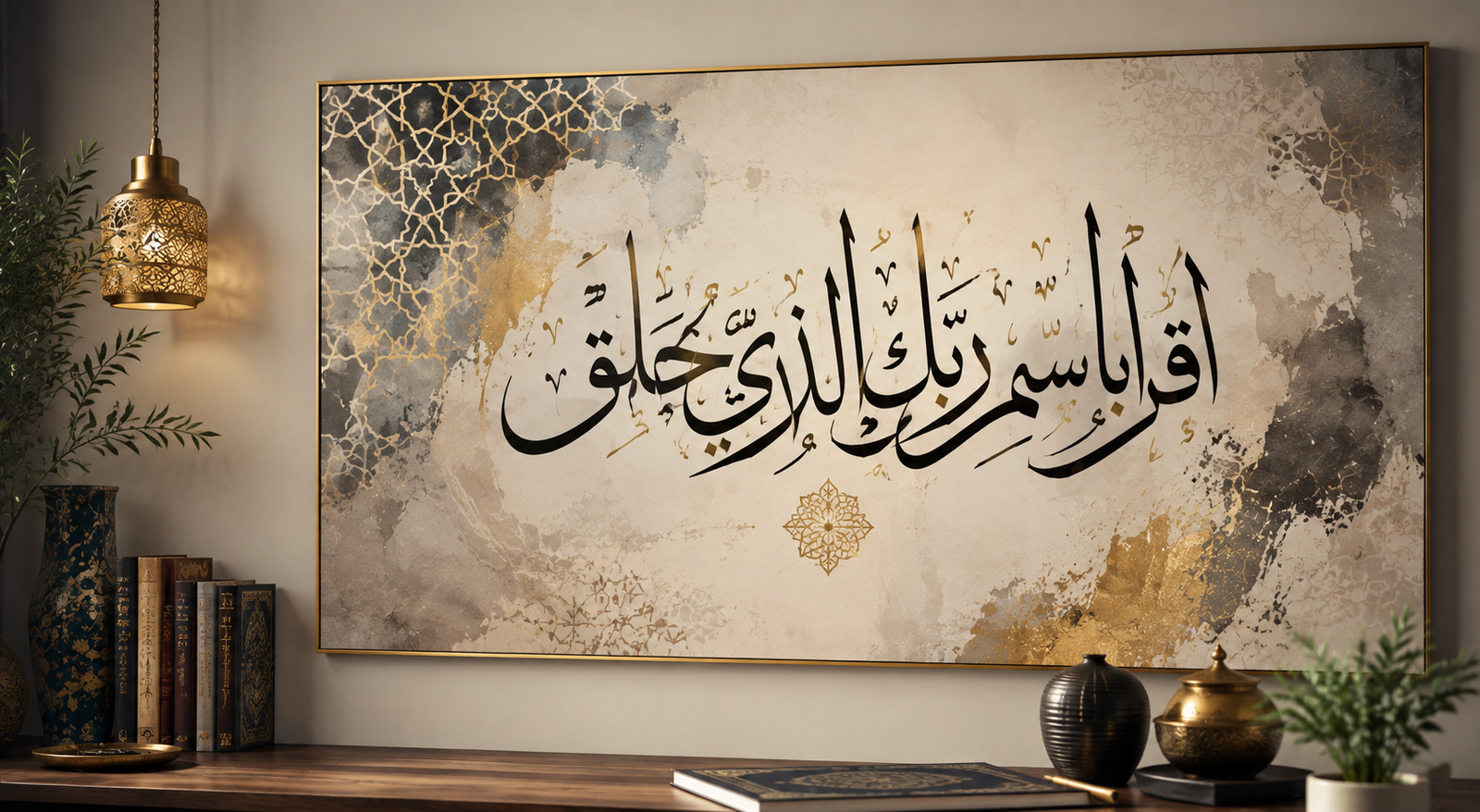
Modern Islamic Calligraphy does not simply replace traditional practice with something new. Instead, it builds on centuries of knowledge while giving artists greater freedom to explore scale, abstraction, negative space, mixed media, and modern interiors. This has helped Islamic Calligraphy Art reach galleries, homes, cultural spaces, weddings, design projects, and private collections across the United States and beyond.
For viewers, the appeal goes beyond decoration. A carefully created calligraphic work can connect language, faith, architecture, history, and personal identity within a single visual composition. That combination is one reason contemporary Islamic calligraphy continues to develop as an important part of contemporary art.
Key Takeaways
- Modern Islamic Calligraphy combines traditional calligraphic foundations with contemporary approaches to composition, materials, colour, and presentation.
- Contemporary artists can preserve the identity of Arabic script while experimenting with abstraction, scale, texture, geometry, and negative space.
- Islamic Calligraphy Wall Art can function as both meaningful artwork and an intentional element of interior design.
- Custom pieces are particularly suitable for meaningful occasions, including weddings, family celebrations, cultural spaces, and private collections.
- A strong contemporary calligraphy piece should balance visual creativity with respect for the written language and the meaning of the text.
- Choosing an artist for a custom commission should involve reviewing their portfolio, discussing the intended text, understanding the creative process, and confirming the final format.
What Is Modern Islamic Calligraphy?
Modern Islamic Calligraphy is an evolving form of calligraphic art that uses the foundations of Islamic and Arabic calligraphy while exploring contemporary artistic ideas. Traditional calligraphy places significant emphasis on proportion, letter construction, rhythm, spacing, balance, and disciplined execution. Modern practitioners may retain these principles while introducing new compositions, unconventional layouts, modern colour palettes, large-scale formats, textured surfaces, digital preparation, or mixed media. The result can range from highly refined script-based compositions to more abstract artworks in which letters become part of a larger visual structure. The key distinction is that modern does not necessarily mean disconnected from tradition. Many contemporary works remain deeply influenced by established calligraphic practices while responding to modern tastes and spaces.How Islamic Calligraphy Became Part of Contemporary Art
Islamic calligraphy has historically occupied a special position within visual culture because written language itself can become an artistic medium. Across different periods and regions, calligraphic styles developed distinctive characteristics. Scripts such as Kufic, Thuluth, Naskh, Diwani, and others demonstrate how Arabic lettering can be transformed through proportion, geometry, curvature, density, and rhythm. Contemporary artists inherit this rich visual vocabulary but are not limited to historical presentation methods. A modern composition might place carefully constructed lettering within an open field of negative space. Another may build an entire artwork around the repetition of a letterform. A large-scale piece might use layered textures to create visual depth, while a minimalist work may rely almost entirely on proportion and spacing. This freedom has expanded the role of Islamic Calligraphy from a primarily script-focused discipline into a broader artistic language.What Makes Contemporary Islamic Calligraphy Different?
Contemporary Islamic Calligraphy often focuses on how traditional script can communicate visually within modern artistic environments. Several characteristics commonly appear in contemporary work.Experimental Composition
Traditional calligraphy can follow established arrangements, while contemporary artists may explore asymmetry, circular compositions, fragmented structures, vertical arrangements, or carefully controlled abstraction. The composition remains intentional. Even when a piece appears spontaneous, successful work usually depends on careful decisions about spacing, visual weight, hierarchy, and movement.Modern Materials
Ink and paper remain important, but contemporary artists can work across a much wider range of surfaces and media. Depending on the project, calligraphy may be incorporated into canvas, wood, textured surfaces, architectural installations, digital artwork, or mixed-media pieces. Material selection affects the character of the finished work. A textured surface may create depth, while a smoother surface can emphasise precision and delicate letterforms.Colour and Visual Contrast
Traditional calligraphy is often associated with restrained palettes, but modern artists can explore a broader range of colours. Colour can establish mood, separate layers, create focal points, or help integrate the artwork with its surroundings. In a contemporary interior, for example, the colour strategy may be designed to complement the architecture without overpowering the written form.Abstraction
Abstraction is one of the most interesting developments in contemporary calligraphy. An artist may emphasise the rhythm and geometry of letters without presenting them in a conventional linear arrangement. Curves, dots, strokes, and repeated forms can become visual elements in their own right. However, abstraction requires care. When meaningful text is involved, artistic experimentation should not unnecessarily compromise legibility or the integrity of the script.The Relationship Between Traditional and Modern Islamic Calligraphy
Modern Islamic Calligraphy is strongest when creativity is supported by a serious understanding of traditional foundations. Traditional Islamic Calligraphy is not simply an old decorative technique. It involves established principles concerning letter proportions, stroke relationships, spacing, rhythm, and composition. Contemporary artists can reinterpret these principles rather than discard them. For example, an artist may use the proportional discipline of a traditional script while arranging the text within a highly contemporary geometric composition. Another artist might retain classical letter construction but introduce unconventional scale or surface texture. This relationship between continuity and experimentation gives contemporary Islamic calligraphy its distinctive character.Why Islamic Calligraphy Art Has Strong Contemporary Appeal
Islamic Calligraphy Art occupies an unusual position because it can communicate meaning and visual beauty simultaneously. A painting may create emotion through colour, shape, and texture. Calligraphy can do this while also carrying the meaning of written language. For many viewers, the artwork therefore has multiple layers. There is the visual layer, created through composition and form. There is the linguistic layer, created through the written text. There may also be a cultural, historical, or spiritual layer depending on the subject. This depth allows calligraphy to work particularly well in spaces where art is expected to have personal or cultural significance.Islamic Calligraphy Wall Art in Contemporary Interiors
Islamic Calligraphy Wall Art has become a natural choice for people looking for artwork that feels meaningful while fitting into modern interiors. The scale and composition of a calligraphic piece can influence how a room feels. A large artwork can create a strong focal point, while a smaller piece may contribute to a more intimate gallery-style arrangement. Placement matters as much as the artwork itself. Consider:- The available wall space
- Viewing distance
- Lighting conditions
- Existing architectural features
- Colour relationships
- The visual weight of surrounding furniture
- Whether the artwork is intended as a focal point or part of a collection
The Growing Interest in Custom Islamic Calligraphy
Custom Islamic Calligraphy allows a client to commission artwork around a particular text, occasion, space, or personal idea. This makes the process different from selecting a ready-made print. A custom project typically begins with understanding what the client wants the artwork to communicate. The artist then considers the wording, script, composition, dimensions, materials, and visual direction. For example, someone may want a meaningful calligraphic composition for a home, while another client may need artwork designed specifically for a large architectural wall. Customisation can therefore involve much more than simply changing the text. The entire visual structure can be developed around the intended purpose.Islamic Wedding Calligraphy: Creating Meaningful Artwork for Special Occasions
Islamic Wedding Calligraphy can add a deeply personal artistic element to wedding celebrations and related spaces. A custom wedding piece might incorporate meaningful Arabic text, names, dates, or other appropriate elements, depending on the client's requirements and the artist's approach. The strongest wedding calligraphy is not simply attractive. It should feel connected to the occasion. The artwork may later become part of the couple's home, allowing it to continue carrying personal significance after the celebration has ended. When commissioning such work, it is useful to discuss the wording carefully, confirm spelling and diacritical requirements where relevant, and review the proposed composition before production.Islamic Calligraphy Prints and Original Artwork
Islamic Calligraphy Prints make calligraphic artwork more accessible for people who want to incorporate the visual language of the art form into their homes or workspaces. Prints can reproduce an original composition while offering flexibility in size and presentation. They can be framed individually or incorporated into a broader wall arrangement. Original artwork, on the other hand, provides the physical qualities of the artist's chosen materials, including surface texture, brush or pen work, layering, and other details that may not be fully represented in reproduction. The right format depends on the intended setting, budget, scale, and importance of the piece.How an Islamic Calligraphy Commission Typically Works
An Islamic Calligraphy Commission is most successful when communication between artist and client is clear from the beginning. A typical process may include the following stages.1. Define the Purpose
Start by identifying where the artwork will be displayed and what role it should play. Is it intended for a home, office, wedding, cultural environment, gift, collection, or architectural space?2. Select the Text
The wording is central to the project. Clients should establish the exact text before the final artwork is produced. For meaningful or sacred text, accuracy deserves particular attention.3. Discuss the Artistic Direction
This is where the client and artist can discuss script preferences, overall composition, scale, materials, colours, and the desired visual character.4. Develop the Composition
The artist creates a visual structure that considers letterforms, spacing, balance, negative space, and the relationship between text and surrounding elements.5. Review and Refine
Depending on the project, preliminary concepts may be reviewed before the final artwork is produced. Clear feedback at this stage can help prevent misunderstandings later.6. Final Production
Once the direction is approved, the artist completes the work using the selected materials and format. The final presentation may include framing, mounting, or another suitable method depending on the project.How Much Does Custom Islamic Calligraphy Cost?
The cost of Custom Islamic Calligraphy can vary substantially because each commission is different. Factors that can influence pricing include the complexity of the composition, artwork size, materials, level of customisation, production method, preparation time, finishing requirements, and whether the piece is an original artwork or reproduction. A small, relatively simple composition will generally involve a different level of work from a large, highly detailed original piece designed for a specific architectural space. For an accurate estimate, clients should provide the artist with the intended text, approximate dimensions, preferred format, desired materials if known, and information about where the work will be displayed.How to Choose an Islamic Calligraphy Artist
Choosing an artist should involve more than looking for an attractive finished image. A portfolio can reveal how consistently an artist handles lettering, composition, scale, and different artistic approaches. Look for evidence that the artist understands both the visual and linguistic dimensions of calligraphy. It is also useful to ask about the creative process. Questions might include:- How is the text checked before final production?
- Which calligraphic styles does the artist work with?
- Can the composition be customised for a particular space?
- What materials and formats are available?
- How are revisions handled?
- What information is needed before a commission begins?