2026/04/14
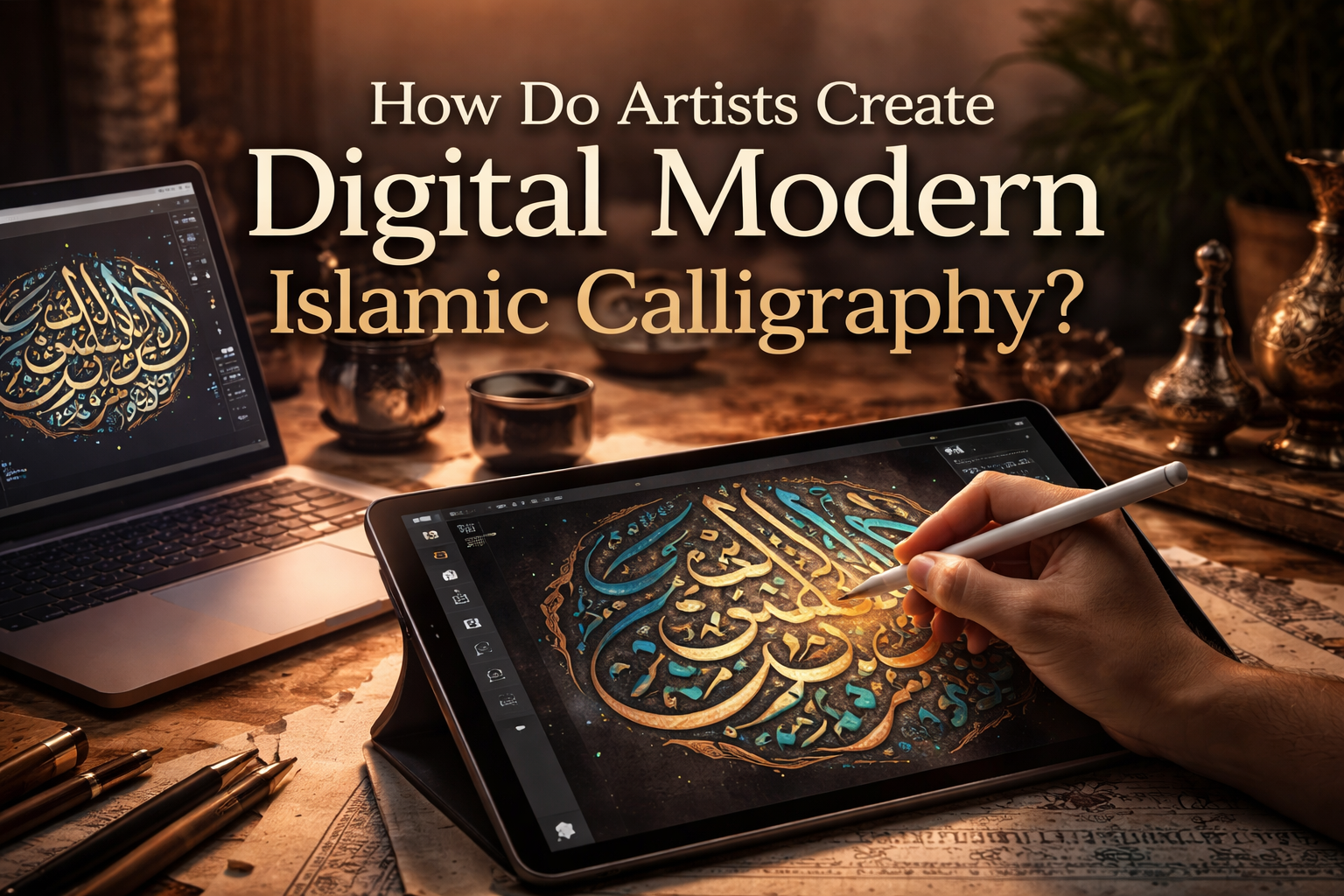
How do artists create digital modern Islamic calligraphy?
Digital art is transforming the way traditional practices evolve, and Islamic calligraphy is no exception. Once crafted solely with reed pens and ink, this sacred art form is now being reimagined through tablets, design software, and creative digital techniques. But how exactly do artists create digital modern Islamic calligraphy while preserving its spiritual depth and visual elegance?
This guide explores the full process, from traditional foundations to advanced digital workflows, offering a clear and engaging look into how contemporary artists bring this timeless art into the modern world.
Understanding the Foundation of Islamic Calligraphy
Before diving into digital tools, artists must first understand the essence of Islamic calligraphy. This art form is deeply rooted in culture, spirituality, and language. It is not just about writing words beautifully but about conveying meaning, harmony, and balance. Classical scripts such as Naskh, Thuluth, Diwani, and Kufic form the backbone of modern interpretations. Even digital artists spend years studying these styles to ensure authenticity in their work. The key principles include:- Proportion and geometry
- Rhythm and flow
- Balance between positive and negative space
- Respect for the text, often derived from religious or poetic sources
Transitioning from Traditional to Digital Tools
Modern Islamic calligraphy artists often begin their journey with traditional tools and then transition into digital platforms. This shift allows for greater flexibility, experimentation, and scalability.Common Digital Tools Used
Artists rely on a combination of hardware and software to create their work:- Graphic tablets such as Wacom or iPad with stylus
- Design software like Adobe Illustrator
- Painting software like Procreate or Photoshop
Step by Step Process of Creating Digital Islamic Calligraphy
1. Concept and Inspiration
Every piece begins with an idea. Artists choose a phrase, verse, or word that holds meaning. Inspiration may come from architecture, nature, or classical manuscripts. They also decide on the style. Some aim for traditional accuracy, while others experiment with modern abstraction.2. Sketching the Layout
Even in digital workflows, sketching remains essential. Artists often start with rough drafts, either on paper or directly on a tablet. This stage focuses on:- Composition
- Letter placement
- Overall balance
3. Building the Structure Digitally
Once the sketch is finalized, the artist begins refining the design using digital tools. In vector software, they use paths and anchor points to create precise curves and shapes. This ensures scalability without losing quality. In painting software, they use custom brushes that replicate traditional calligraphy pens, allowing for a more organic feel.4. Refining Details and Proportions
Precision is critical in Islamic calligraphy. Artists carefully adjust:- Line thickness
- Spacing between letters
- Curvature and angles
5. Adding Color and Texture
Modern Islamic calligraphy often incorporates vibrant colors, gradients, and textures. Artists experiment with:- Gold and metallic effects
- Watercolor textures
- 3D shading and lighting
6. Final Composition and Export
The final stage involves preparing the artwork for its intended use. Digital calligraphy can be used for:- Social media posts
- Prints and canvases
- Branding and logos
- Architectural designs
Techniques That Define Modern Digital Islamic Calligraphy
Digital tools open the door to innovative techniques that were not possible before.Layering
Artists use multiple layers to separate elements such as text, background, and effects. This allows for easy editing and experimentation.Symmetry and Geometry
Modern designs often incorporate geometric patterns inspired by Islamic art. Digital tools make it easier to achieve perfect symmetry.Motion and Animation
Some artists take it further by creating animated calligraphy, bringing words to life through motion graphics.3D Rendering
Advanced artists use 3D software to create depth and realism, turning calligraphy into sculptural forms.Balancing Tradition with Innovation
One of the biggest challenges artists face is maintaining authenticity while embracing modern tools. Respect for tradition means:- Following established rules of script
- Preserving the meaning of the text
- Avoiding distortion that compromises readability
- Explore new styles
- Reach global audiences
- Integrate calligraphy into modern design contexts
Common Mistakes Beginners Should Avoid
While digital tools make the process more accessible, beginners often fall into certain traps.- Ignoring traditional قواعد and proportions
- Overusing effects that distract from the calligraphy
- Relying too much on software instead of skill
- Skipping the sketching phase
Why Digital Islamic Calligraphy Is Growing Rapidly
The rise of digital platforms has made Islamic calligraphy more accessible than ever. Key reasons for its popularity include:- Global reach through social media
- Demand for unique digital art and branding
- Ability to monetize through prints and commissions
- Fusion of tradition with modern design trends
How Artists Continue to Improve Their Craft
Even experienced artists keep refining their skills. They do this by:- Studying classical manuscripts
- Practicing daily lettering exercises
- Learning new software techniques
- Engaging with other artists and communities
The Role of Education and Mentorship
Learning from experienced calligraphers plays a crucial role in mastering the art. Structured lessons, workshops, and mentorship programs help artists understand:- Script rules and history
- Advanced composition techniques
- Professional workflows
Future Trends in Digital Islamic Calligraphy
The future of this art form looks incredibly exciting. Emerging trends include:- AI assisted design tools
- Interactive and immersive calligraphy
- Integration with virtual and augmented reality
- Use in modern architecture and interior design