2026/04/14
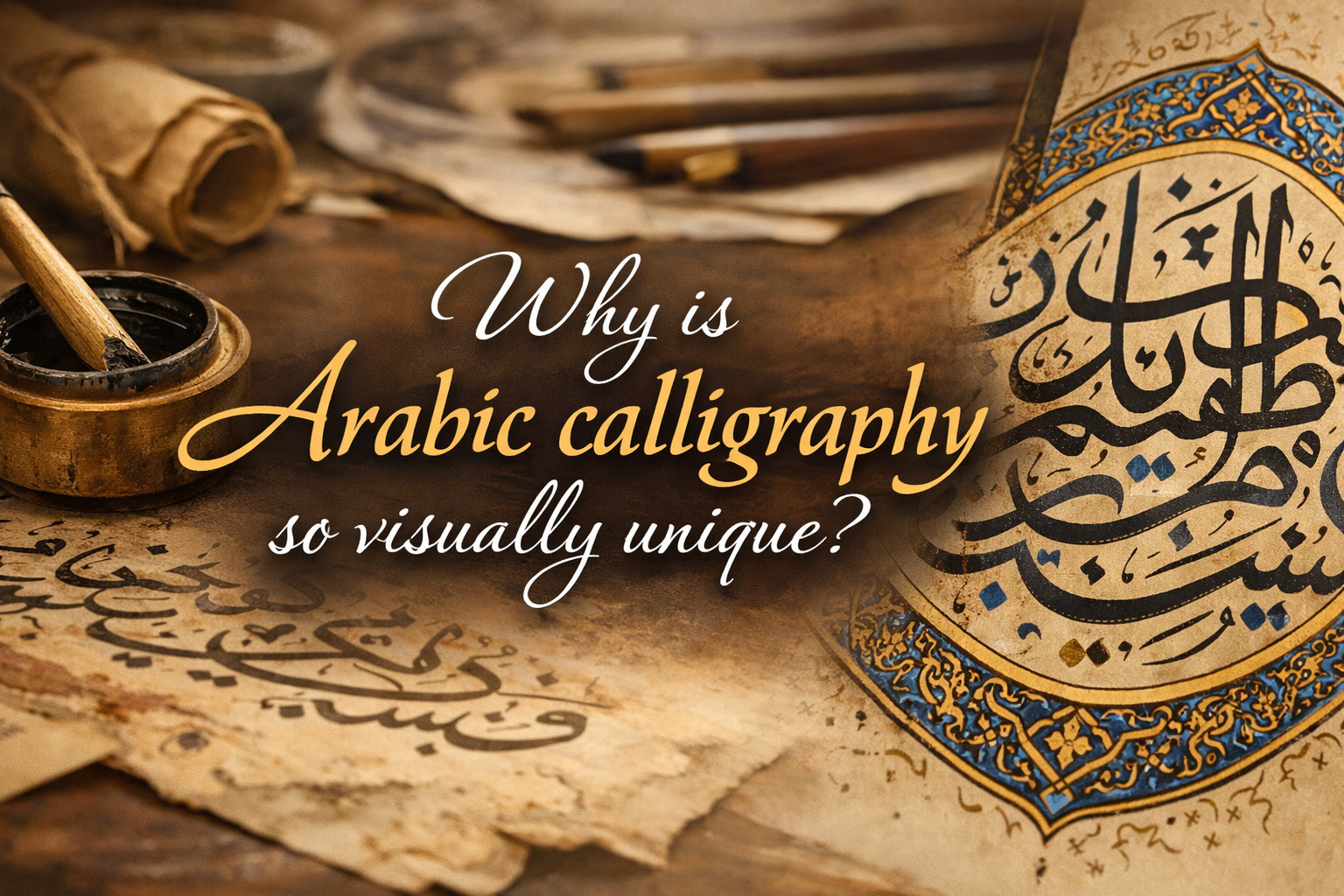
Why is Arabic calligraphy so visually unique?
Arabic calligraphy has captivated audiences for centuries, yet in today’s fast moving digital landscape, its visual appeal feels more powerful than ever. From gallery exhibitions to social media posts and modern branding, this art form continues to stand out in a way that feels both timeless and innovative. But what exactly makes Arabic calligraphy so visually unique?
In this article, we will explore the artistic, cultural, and technical elements that define Arabic calligraphy’s distinct beauty. We will also look at how contemporary artists, including those featured at Nihad Dukhan’s platform, are shaping its modern identity.
The Foundation of Arabic Calligraphy’s Beauty
At its core, Arabic calligraphy is more than just writing. It is a structured art form built on harmony, proportion, and rhythm. Unlike many other scripts, Arabic letters are inherently fluid. They connect, stretch, and transform depending on their position within a word. This fluidity creates a natural sense of movement. Each word feels alive, almost as if it is flowing across the page. This dynamic quality is one of the primary reasons Arabic calligraphy stands out visually.Key Characteristics That Define Its Uniqueness
- Connected letterforms that create continuous motion
- Variable shapes for each letter depending on placement
- Balance between thick and thin strokes
- Integration of geometry and organic flow
The Role of Proportion and Geometry
One of the lesser known aspects of Arabic calligraphy is its mathematical precision. Traditional calligraphers follow strict rules of proportion, often based on the dot system. This system uses the width of a pen nib to measure and construct each letter. The result is a perfectly balanced composition where every curve and line has a purpose.Why Geometry Matters
- It ensures visual harmony across the entire piece
- It creates consistency within different calligraphy styles
- It allows artists to experiment without losing structure
The Influence of Cultural and Spiritual Meaning
Another reason Arabic calligraphy feels unique is the depth of meaning behind it. Historically, it has been closely associated with religious and cultural expression, especially in Islamic art. In traditional contexts, calligraphy became a primary form of artistic expression. Artists used it to convey spiritual messages, poetry, and philosophical ideas.Emotional and Symbolic Impact
- Words are not just read, they are experienced visually
- The form of the text enhances its meaning
- The artwork often evokes a sense of contemplation and calm
Diversity of Styles and Scripts
Arabic calligraphy is not limited to a single style. In fact, its diversity is one of its greatest strengths. Over time, various scripts have developed, each with its own personality and visual rhythm.Popular Styles
- Naskh: Clear, readable, and widely used in books
- Thuluth: Elegant and curved, often seen in architectural decoration
- Diwani: Highly decorative and intricate
- Kufic: Angular and geometric, known for its bold structure
The Power of Line and Movement
One of the most striking features of Arabic calligraphy is its use of line. The lines are not static. They bend, stretch, and interact with one another in a way that creates rhythm. This sense of movement draws the viewer’s eye across the composition. It encourages exploration, making the artwork feel immersive.How Movement Enhances Visual Appeal
- Curves guide the eye smoothly through the design
- Elongated strokes add elegance and drama
- Intersections create complexity and depth
Integration with Modern Design Trends
In today’s world, Arabic calligraphy is not confined to traditional forms. It has evolved into a versatile design element used in various industries. From digital illustrations to branding and fashion, artists are blending traditional techniques with modern aesthetics.Modern Applications
- Logo design and branding
- Digital art and social media visuals
- Interior decor and wall art
- Fashion and textile design
The Role of Tools and Techniques
The tools used in Arabic calligraphy also contribute to its unique look. Traditional calligraphers use reed pens and special inks, which produce distinctive strokes. These tools allow for variations in thickness and texture that are difficult to replicate with standard writing instruments.Traditional vs Digital Tools
Traditional Tools- Reed pens
- Handmade inks
- Paper with specific textures
- Stylus and tablets
- Vector design software
- Custom digital brushes
The Balance Between Simplicity and Complexity
Arabic calligraphy has a unique ability to be both simple and complex at the same time. A single word can be minimal and elegant, or it can be transformed into an intricate composition. This versatility makes it appealing to a wide range of audiences.Why This Balance Matters
- It allows for creative experimentation
- It adapts to different artistic contexts
- It keeps the art form fresh and relevant
The Influence of Modern Artists
Today’s calligraphers are redefining what Arabic calligraphy can be. They are experimenting with new styles, materials, and concepts. Artists associated with Nihad Dukhan’s work often blend traditional scripts with abstract art, creating pieces that feel contemporary yet rooted in history.Emerging Trends
- Fusion of calligraphy with abstract painting
- Use of bold colors and unconventional layouts
- Integration with typography and graphic design
Why It Stands Out Globally
In a global context, Arabic calligraphy is instantly recognizable. Its flowing forms and intricate designs set it apart from other writing systems.Global Appeal
- It combines art and language seamlessly
- It offers a unique visual experience
- It carries cultural depth and authenticity
The Future of Arabic Calligraphy
As technology continues to evolve, so does Arabic calligraphy. Digital platforms are making it more accessible, while artists continue to innovate. The future of this art form lies in its ability to adapt without losing its essence.What to Expect
- More digital experimentation
- Greater global collaboration
- Continued blending of tradition and modernity