2026/02/25
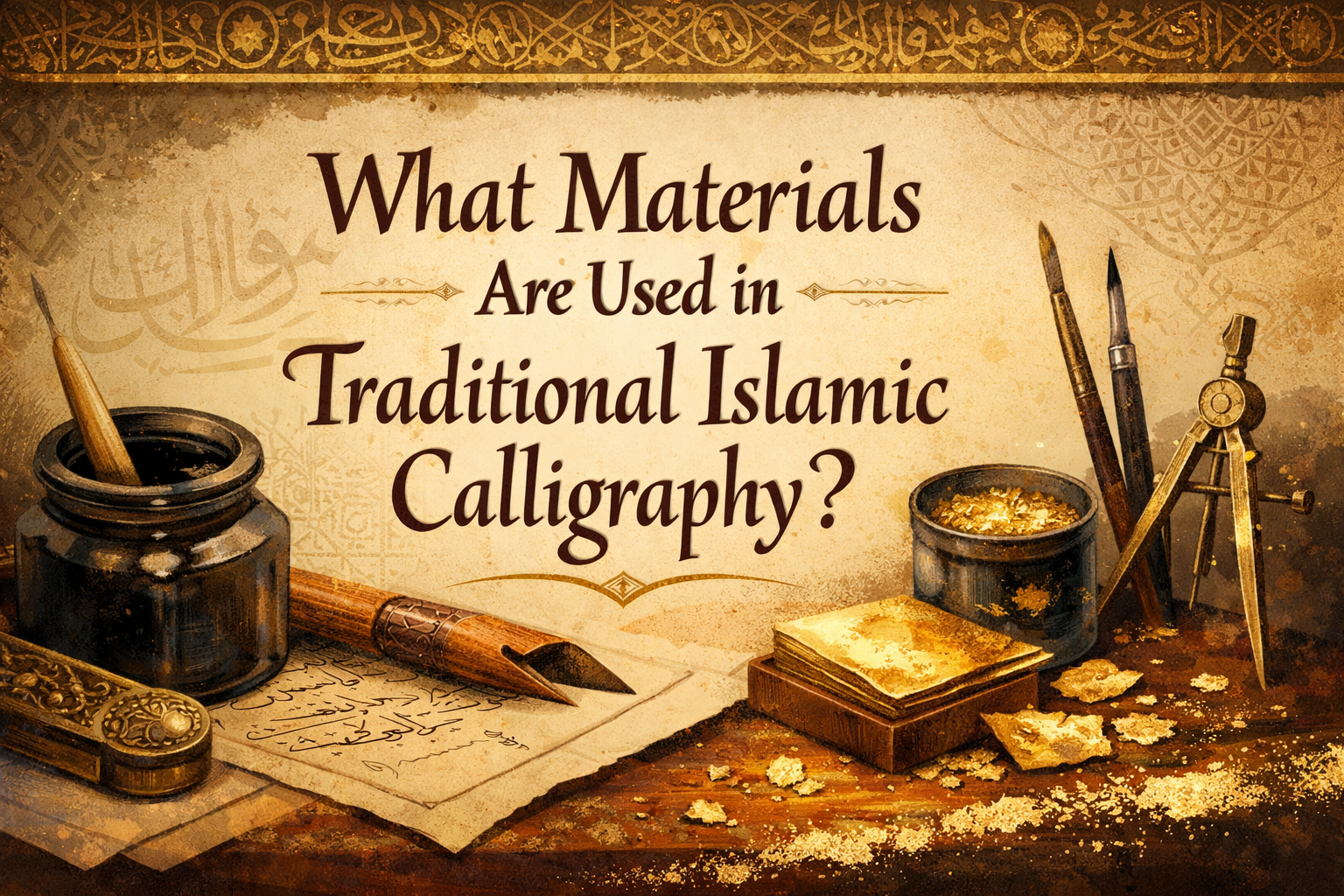
What Materials Are Used in Traditional Islamic Calligraphy?
Islamic calligraphy has always been more than beautiful writing. It is devotion shaped into form, discipline turned into rhythm, and ink transformed into meaning. In today’s world of digital art, AI generated typography, and minimalist design trends, many people are rediscovering the quiet depth of traditional craftsmanship. That curiosity leads to an important question: what materials are actually used in traditional Islamic calligraphy?
At first glance, it may seem simple. A pen, some ink, and paper. But the reality is far richer. Each tool carries history, technique, and spiritual symbolism. The materials are chosen carefully, prepared with patience, and respected as part of the artistic process.
For collectors, students, and admirers of the work of Nihad Dukhan, understanding these materials deepens appreciation. The beauty you see is not accidental. It is the result of carefully selected tools that have been refined over centuries.
Let us explore them in detail.
Why Materials Matter in Islamic Calligraphy
Islamic calligraphy developed as a sacred art form, primarily to preserve and beautify the words of the Quran. Because of this spiritual significance, calligraphers treated their materials with great respect. The tools are not random. They influence line weight, ink flow, texture, durability, and overall harmony. A change in paper or pen can alter the character of the script entirely. Even today, while modern artists may experiment with acrylic, canvas, or digital platforms, traditional materials remain the foundation of authenticity.The Qalam: The Traditional Reed Pen
The heart of Islamic calligraphy is the qalam, a pen traditionally made from reed. The qalam is not manufactured in a factory. It is carefully selected from specific types of reed, dried, cut, shaped, and sharpened by hand. The most prized reeds often come from regions in the Middle East where the plant grows strong and straight. The tip is cut at a precise angle depending on the script being written. A broad cut produces thick strokes. A narrower cut creates delicate lines. The angle determines how letters flow and how curves are formed. Sharpening the qalam is an art in itself. Calligraphers use a special knife to shape the nib with precision. Many artists prefer to cut their own pens rather than rely on pre-made tools. This ensures that the pen matches their hand and style perfectly. The qalam produces dynamic lines with natural variation. Unlike metal nib pens, it responds to pressure and movement in a uniquely organic way. That living quality is one reason traditional calligraphy feels so expressive.Ink: The Soul of the Script
Ink is more than a medium. It is the voice of the pen. Traditional Islamic calligraphy uses handmade black ink made from soot. This soot is often collected from burning oil or resin. It is then mixed with natural binders such as gum arabic and water to create a smooth, rich liquid. High quality ink has several important characteristics:- Deep, intense black color
- Smooth flow without blotting
- Long lasting permanence
- Resistance to fading
Paper: A Surface Prepared with Care
Paper plays a critical role in traditional Islamic calligraphy. Ordinary paper is rarely sufficient. Historically, calligraphers used handmade paper that was specially treated. The surface was polished and coated with a mixture that could include starch, egg white, or other natural substances. This process, known as sizing and burnishing, created a smooth writing surface. The benefits of treated paper include:- Controlled ink absorption
- Crisp, clean edges
- Enhanced durability
- Smooth pen movement
Gold Leaf and Illumination Materials
Islamic calligraphy is often accompanied by illumination, known as tazhib. This decorative art frames or enhances the script with intricate patterns, geometric motifs, and floral designs. Gold leaf is one of the most prestigious materials used in illumination. It is applied with delicate brushes and special adhesives. The process requires patience and precision. Other materials used in illumination include:- Mineral pigments
- Natural dyes
- Fine brushes made from animal hair
- Burnishing tools to polish gold surfaces
Rulers, Compasses, and Measuring Tools
Precision is essential in Islamic calligraphy. Letters follow strict proportional systems. Each script style has mathematical harmony. To achieve this, calligraphers use:- Rulers to draw guidelines
- Compasses for circular compositions
- Measuring techniques based on dot units
Surfaces Beyond Paper
While paper is traditional, Islamic calligraphy has historically appeared on many surfaces. These include:- Parchment
- Wood panels
- Ceramic tiles
- Metal surfaces
- Architectural walls
Natural Pigments and Color Usage
Although black ink dominates classical manuscripts, color has always had a role. Red ink was often used to mark vowel signs or important words. Blue, green, and other tones appeared in headings and decorative sections. Natural pigments came from minerals and plants. These were ground into fine powders and mixed with binders. The color palette was typically refined rather than loud. Harmony and dignity were prioritized over bold contrast. Modern trends sometimes introduce vibrant acrylics or metallic finishes, but traditional color choices remain timeless.The Knife and Pen Case
Two often overlooked but essential tools are the knife and the pen case. The knife is used to cut and maintain the qalam. A precise blade is critical for achieving clean nib edges. The pen case, known historically as a divit, stores pens, ink, and small tools. It was often beautifully crafted and sometimes decorated with metal or wood carvings. These objects reflect how calligraphy was both a craft and a respected profession.Preparation as Part of the Art
One fascinating aspect of traditional Islamic calligraphy is how much preparation is involved. The artist does not simply sit down and write. They:- Cut and shape the pen
- Prepare the ink
- Treat and polish the paper
- Draw guidelines
- Plan composition carefully
Traditional Scripts and Their Material Needs
Different scripts may influence material choices. For example:- Thuluth requires a broader pen tip and larger scale
- Naskh often uses finer nibs for detailed writing
- Diwani emphasizes fluidity and decorative curves