2026/06/29
What Is Islamic Calligraphy? History, Styles, Meaning, and Modern Uses
Islamic calligraphy is one of the most admired art forms in the world. It combines language, spirituality, culture, and artistic expression into a visual tradition that has remained relevant for more than a thousand years. From the walls of historic mosques to contemporary home décor in the United States, Islamic calligraphy continues to inspire people through its beauty and deeper meaning.
Unlike many artistic traditions that focus primarily on imagery, Islamic calligraphy places written words at the center of artistic creation. Verses from the Quran, meaningful prayers, poetry, and inspirational messages are transformed into elegant designs that communicate both visual beauty and spiritual significance.
Today, collectors, interior designers, art enthusiasts, and homeowners increasingly appreciate Islamic calligraphy wall art for its timeless appeal and cultural richness. Understanding its history, styles, symbolism, and modern applications can help anyone make informed decisions when exploring this remarkable art form.
Understanding Islamic Calligraphy
Islamic calligraphy is the artistic practice of writing Arabic script in a decorative and aesthetically refined manner. While Arabic is the primary language associated with Islamic calligraphy, the art extends beyond simple handwriting. Every curve, line, proportion, and composition is carefully crafted to create harmony and visual impact. The tradition emerged as a way to preserve and honor sacred texts, particularly the Quran. Over centuries, calligraphers developed sophisticated techniques and styles that elevated writing into one of the highest forms of artistic expression within Islamic civilization. The beauty of Islamic calligraphy lies in its ability to communicate meaning on multiple levels. A viewer may appreciate the visual elegance of the design while also connecting with the spiritual or cultural message conveyed through the text.The Origins and History of Islamic Calligraphy
The roots of Islamic calligraphy can be traced back to the 7th century with the emergence of Islam. As the Quran was revealed and recorded, preserving its words accurately became a priority. Early Muslim scribes devoted significant effort to developing scripts that would ensure clarity and consistency.Early Development
During the earliest years of Islam, handwritten manuscripts played a critical role in preserving religious teachings. Scribes carefully copied Quranic verses, gradually refining letterforms and writing techniques. One of the earliest scripts used extensively for Quranic manuscripts was Kufic. Named after the city of Kufa in present-day Iraq, this style featured strong geometric shapes and angular lines. Kufic became widely recognized for its dignity and visual strength.Expansion Across Civilizations
As Islamic civilization expanded across the Middle East, North Africa, Spain, Central Asia, and beyond, calligraphy evolved alongside local artistic traditions. Different regions developed distinctive styles while maintaining respect for established principles. Calligraphy appeared in manuscripts, architecture, ceramics, textiles, coins, and decorative objects. It became an essential element of Islamic visual culture and a symbol of intellectual and spiritual achievement.The Golden Age of Calligraphy
Between the 10th and 16th centuries, Islamic calligraphy reached extraordinary levels of sophistication. Master calligraphers established formal rules governing letter proportions, spacing, composition, and balance. These standards created consistency while still allowing artists to express creativity. Many of the styles developed during this period remain influential today.Why Islamic Calligraphy Holds Deep Meaning
Islamic calligraphy is more than decoration. It carries layers of religious, cultural, and personal significance. For many people, calligraphy serves as a visual reminder of faith, values, and spiritual reflection. Quranic verses, names of Allah, prophetic sayings, and meaningful prayers often appear in calligraphic artworks because they inspire contemplation and connection. Even individuals who do not read Arabic frequently appreciate Islamic calligraphy because of its universal artistic appeal. The flowing forms, balanced compositions, and intricate designs communicate beauty that transcends language barriers. In contemporary settings, Islamic calligraphy often symbolizes:- Spiritual connection
- Cultural heritage
- Artistic excellence
- Personal inspiration
- Respect for tradition
Major Styles of Islamic Calligraphy
Over centuries, numerous calligraphic styles emerged. Each possesses unique characteristics and historical significance.Kufic Script
Kufic is among the oldest forms of Arabic calligraphy. It is characterized by bold, angular lines and geometric structures. Historically, Kufic appeared in early Quran manuscripts, architectural inscriptions, and decorative art. Modern artists frequently use it in contemporary designs because of its striking visual impact and adaptability to geometric compositions.Naskh Script
Naskh became one of the most widely used Arabic scripts due to its clarity and readability. Its rounded letterforms and balanced proportions make it suitable for books, religious texts, and educational materials. Many printed Arabic publications still rely on Naskh-inspired typography.Thuluth Script
Thuluth is known for its elegance, sweeping curves, and elongated vertical strokes. Often used in architectural decoration and ceremonial inscriptions, Thuluth creates a sense of grandeur and sophistication. Many mosque interiors feature Quranic verses rendered in this style.Diwani Script
Developed during the Ottoman period, Diwani is highly decorative and intricate. Its flowing lines and artistic complexity made it popular for royal documents and official correspondence. Today, Diwani remains admired for its ornamental beauty.Farsi or Nastaliq Script
Commonly associated with Persian artistic traditions, Nastaliq features graceful, sloping letterforms. This style is often used for poetry and literary works because of its expressive and fluid appearance.Contemporary Calligraphy Styles
Modern artists frequently blend traditional principles with innovative approaches. Abstract compositions, mixed media artworks, digital designs, and minimalist interpretations have expanded the possibilities of Islamic calligraphy while preserving its cultural roots.Islamic Calligraphy in Architecture
One of the most impressive applications of Islamic calligraphy appears in architecture. Throughout history, calligraphic inscriptions have decorated mosques, schools, palaces, and public buildings. Rather than serving only as decoration, these inscriptions often communicate religious teachings, historical information, or inspirational messages. Calligraphy may be carved into stone, painted onto walls, integrated into tilework, or crafted from wood and metal. The result is an architectural experience where words become part of the physical environment. Visitors to historic Islamic landmarks frequently encounter stunning examples of calligraphy that blend seamlessly with geometric patterns and arabesque motifs.Islamic Calligraphy as Wall Art
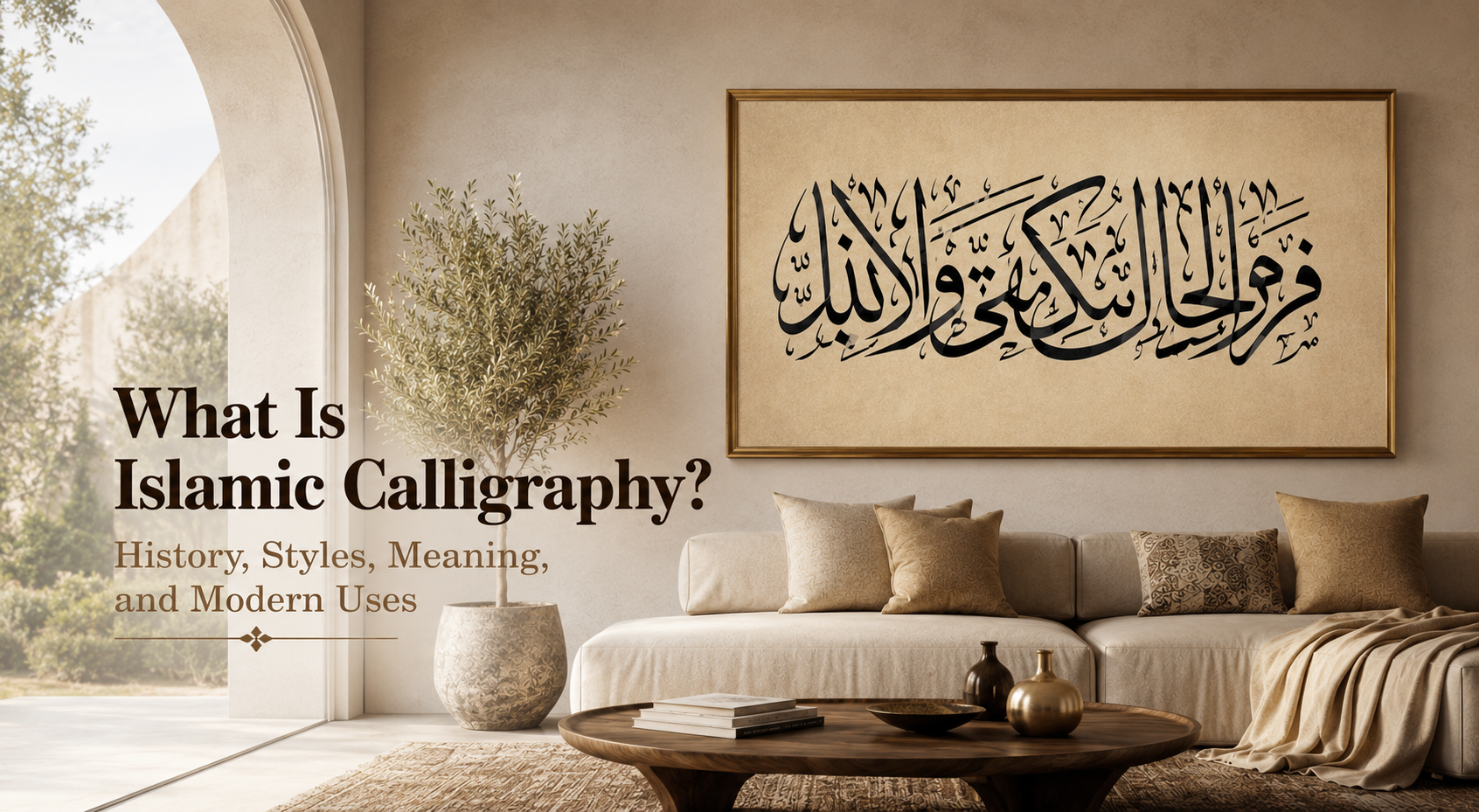
In recent years, Islamic calligraphy wall art has gained significant popularity among homeowners in the United States. People appreciate its ability to add elegance, meaning, and cultural depth to interior spaces. Calligraphy artworks complement a wide range of design styles, including traditional, contemporary, minimalist, and luxury interiors. Common placement areas include:- Living rooms
- Entryways
- Dining rooms
- Prayer spaces
- Offices
- Bedrooms