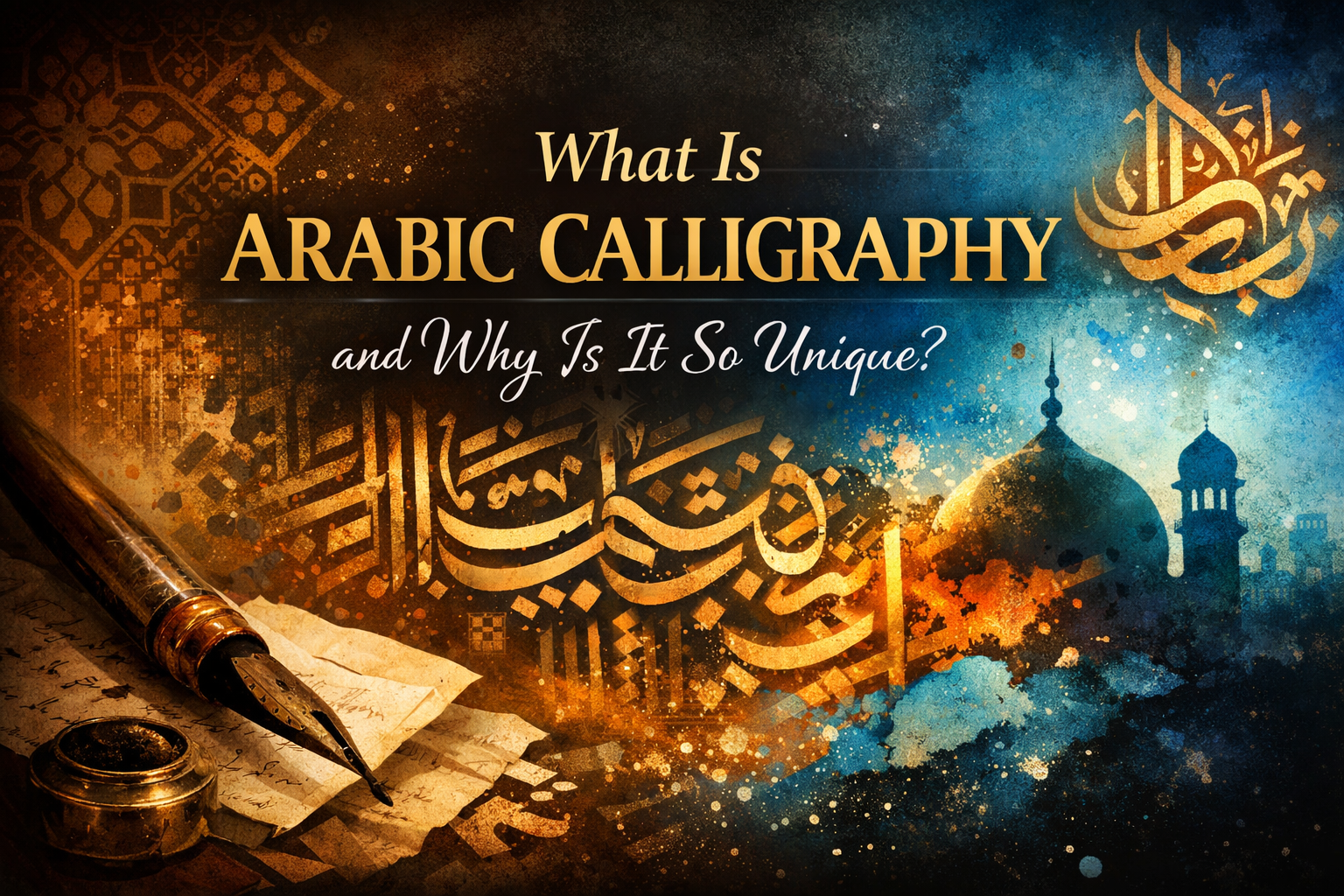
What Is Arabic Calligraphy and Why Is It So Unique?
In a world dominated by digital fonts, AI image generators, and fast visual content, why is Arabic calligraphy still capturing hearts across cultures? Why are designers, collectors, and art lovers rediscovering it as both a spiritual practice and a modern design trend?
Arabic calligraphy is not just beautiful writing. It is a living art form that blends language, rhythm, geometry, spirituality, and personal expression into a single visual experience. And today, as people search for deeper meaning in art, it feels more relevant than ever.
On ndukhan.com, artist Nihad Dukhan explores this timeless art through contemporary compositions that speak to both tradition and innovation. But before we explore its modern appeal, let us understand what Arabic calligraphy truly is and why it stands apart.
What Is Arabic Calligraphy?
Arabic calligraphy is the artistic practice of writing Arabic script in a stylized and aesthetically refined way. It transforms language into visual art.
Unlike standard handwriting, calligraphy follows strict rules of proportion, balance, and structure. Every letter has a measured relationship to the others. Spacing, thickness, curves, and angles are carefully calculated to create harmony.
But Arabic calligraphy is not just technical precision. It is emotional. It is spiritual. It is expressive.
Historically, it developed as a way to beautifully preserve and transmit the Arabic language, especially in religious texts. Over time, it evolved into architectural decoration, manuscript illumination, ceramics, textiles, and modern canvas art.
Why Is Arabic Calligraphy So Unique Compared to Other Writing Systems?
There are many calligraphic traditions around the world. Chinese, Japanese, and Latin scripts all have rich histories. Yet Arabic calligraphy holds a distinctive identity for several reasons.
1. The Script Itself Is Naturally Fluid
Arabic letters connect to one another, forming flowing word structures. This allows for endless artistic variations. Letters stretch, curve, overlap, intertwine, and rise vertically in elegant forms.
The script can feel architectural and structured, or soft and organic. It can be symmetrical and geometric, or spontaneous and expressive.
That natural fluidity makes Arabic calligraphy incredibly versatile.
2. Geometry Plays a Central Role
Arabic calligraphy often follows mathematical proportions. Classical calligraphers used the dot, formed by the nib of the pen, as a measurement unit. Every letter was built using consistent proportional systems.
This precision gives the artwork a strong internal harmony. Even when the composition looks free flowing, it is grounded in geometric balance.
3. It Blends Art and Spiritual Meaning
In many cases, Arabic calligraphy carries spiritual or philosophical texts. The meaning of the words enhances the visual impact. Viewers do not just see beauty. They feel depth.
This combination of message and form creates a layered experience. The artwork speaks visually and intellectually at the same time.
4. It Adapts Beautifully to Modern Design
From contemporary interiors to digital art installations, Arabic calligraphy adapts seamlessly. It appears in abstract paintings, corporate branding, fashion design, and architectural spaces.
Artists like Nihad Dukhan reinterpret traditional forms into modern compositions, making the art accessible to global audiences without losing authenticity.
A Brief Look at Major Styles of Arabic Calligraphy
Arabic calligraphy includes many classical styles, each with its own personality and historical roots.
Kufic
Kufic is one of the earliest forms of Arabic calligraphy. It is angular, structured, and geometric. You often see it in architectural decoration and early manuscripts.
Its bold lines make it ideal for monumental inscriptions and contemporary geometric reinterpretations.
Thuluth
Thuluth is known for its elegance and sweeping curves. It is often used in mosque decorations and formal artistic compositions.
This style demands mastery, as its complex structure requires precise control.
Naskh
Naskh is clearer and more readable, making it widely used in books and printed texts. Its balanced proportions make it both functional and beautiful.
Each style reflects a different mood. Some are bold and architectural. Others are delicate and refined. Together, they show the richness of this tradition.
Why Is Arabic Calligraphy Trending Again in the Digital Era?
It might seem surprising that a traditional art form is gaining attention in a digital world. Yet the reasons are clear.
1. People Crave Authenticity
Fast content can feel disposable. Arabic calligraphy represents patience, discipline, and craftsmanship. Viewers are drawn to art that feels intentional.
2. Visual Culture Is Global
Social platforms and online galleries have introduced Arabic calligraphy to new audiences worldwide. Designers and collectors are discovering its visual power.
3. Fusion with Contemporary Art
Modern artists combine calligraphy with abstract painting, textured canvases, and experimental compositions. The result is art that feels timeless and current at the same time.
On ndukhan.com, Nihad Dukhan presents works that merge classical calligraphic foundations with contemporary visual language. This fusion resonates with collectors who appreciate both heritage and innovation.
4. It Elevates Interior Spaces
Arabic calligraphy has become a statement element in modern interiors. Large scale canvases featuring elegant script bring depth, sophistication, and cultural richness to homes and offices.
The Emotional Impact of Arabic Calligraphy
Arabic calligraphy is not just decoration. It communicates emotion through movement and rhythm.
Thick strokes suggest strength. Extended horizontal lines feel calm and stable. Rising vertical forms create aspiration. Circular compositions evoke unity.
Even if viewers cannot read Arabic, they often feel the artwork’s mood. The script becomes universal in its expression.
That emotional accessibility is part of what makes it so unique.
The Process Behind the Art
Traditional Arabic calligraphy begins with mastering tools and discipline.
Calligraphers often use a reed pen known as a qalam. The angle of the nib determines line thickness. Ink flow must be controlled carefully. Every stroke requires intention.
Before creating a final composition, artists practice individual letters repeatedly to achieve balance. Only after mastering structure can they explore creative arrangements.
Contemporary artists may use canvas, acrylic, mixed media, or digital techniques. Yet the foundation remains rooted in classical principles.
This balance between tradition and innovation keeps the art form alive.
Arabic Calligraphy as Cultural Identity
For many, Arabic calligraphy represents cultural heritage and identity. It connects generations across time.
At the same time, it is not limited to one region. Today, collectors from around the world appreciate it as fine art.
It bridges cultures. It invites dialogue. It challenges viewers to engage with language visually.
Why Artists Like Nihad Dukhan Stand Out
While many artists practice Arabic calligraphy, each develops a unique visual voice.
Nihad Dukhan’s work is known for its refined balance between classical precision and contemporary abstraction. His compositions often explore movement, rhythm, and layered depth.
By maintaining respect for traditional proportional systems while experimenting with layout and texture, his artwork demonstrates how Arabic calligraphy continues to evolve.
For collectors visiting ndukhan.com, the experience is not just about purchasing art. It is about engaging with a living tradition reinterpreted for modern spaces.
Frequently Asked Questions About Arabic Calligraphy
Is Arabic calligraphy only religious?
No. While it has strong historical ties to religious texts, Arabic calligraphy also includes poetry, philosophical quotes, personal expressions, and purely aesthetic compositions.
Do you need to understand Arabic to appreciate it?
Not at all. Many viewers are drawn to the visual harmony and movement of the script. Understanding the language adds another layer, but it is not required to feel its beauty.
Is Arabic calligraphy difficult to learn?
Yes, it requires discipline and patience. Mastering letter proportions and pen control can take years. However, beginners can start with basic strokes and gradually build skill.
How is modern Arabic calligraphy different from classical forms?
Modern artists often experiment with scale, color, texture, and abstraction. While classical forms follow strict rules, contemporary interpretations may bend or reinterpret them while still respecting foundational principles.
Why is Arabic calligraphy considered fine art today?
Because it transcends functional writing. It combines technical mastery, aesthetic composition, cultural meaning, and emotional impact. Collectors recognize its depth and artistic value.
Final Thoughts
So what is Arabic calligraphy, and why is it so unique in today’s digital art trend?
It is a fusion of language and geometry. It is structure and emotion woven together. It is heritage carried forward through modern creativity.
In a time when visuals are everywhere, Arabic calligraphy stands out because it invites you to slow down. To look closely. To feel the rhythm of lines and curves.
Through artists like Nihad Dukhan, this timeless tradition continues to evolve, proving that true art does not fade with technology. It transforms, adapts, and speaks across generations.
And perhaps that is what makes Arabic calligraphy truly unique.