2026/02/25
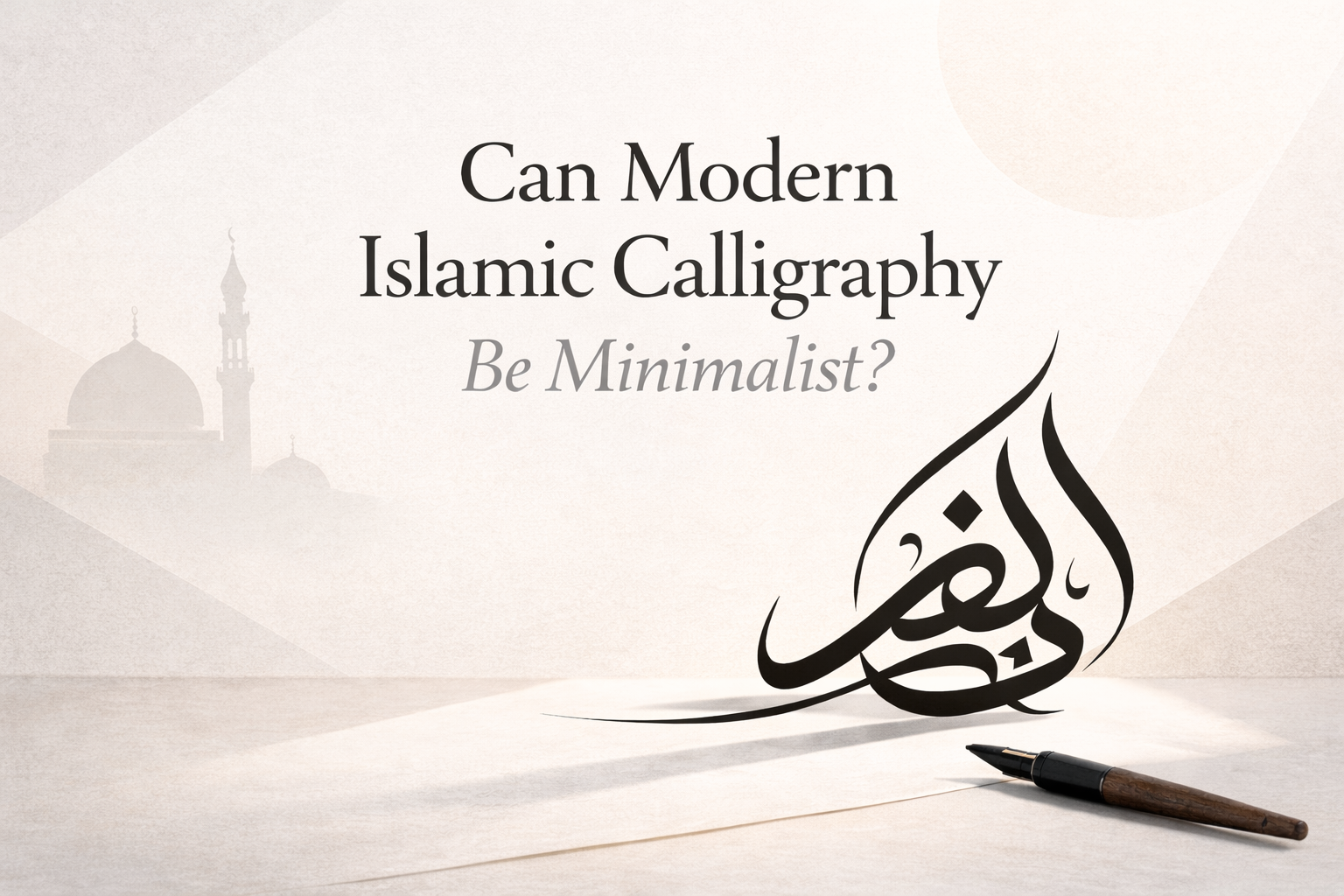
Can Modern Islamic Calligraphy Be Minimalist?
Minimalism has quietly taken over the visual world. From architecture to branding, from interior design to digital art, the preference for simplicity, clarity, and intentional space is everywhere. But where does that leave Islamic calligraphy, an art form historically known for intricate detail, layered symbolism, and ornamental beauty?
Can modern Islamic calligraphy truly be minimalist while preserving its spiritual depth and cultural heritage?
The answer is not only yes, but it is already happening.
Artists like Nihad Dukhan are exploring this powerful intersection where sacred tradition meets contemporary design thinking. The result is not a dilution of the art form, but a refined evolution.
Let’s explore how.
Understanding the Essence of Islamic Calligraphy
Islamic calligraphy is far more than decorative writing. It is a visual expression of faith, philosophy, and sacred language. Traditionally, it has been used to transcribe verses from the Quran, prophetic sayings, and poetic reflections on spirituality. For centuries, calligraphers mastered complex scripts such as Thuluth, Naskh, Diwani, and Kufic. Each script carried its own structure, rhythm, and aesthetic rules. The art demanded discipline, patience, and precision. Historically, Islamic calligraphy often appeared with elaborate geometric patterns, arabesque designs, and architectural ornamentation. Mosques, manuscripts, ceramics, and textiles were adorned with intricate compositions. So where does minimalism fit into something so richly layered?What Minimalism Really Means Today
Minimalism is often misunderstood as simply removing decoration. In reality, it is about intentional reduction. It asks a simple question: what is essential? In contemporary art and design, minimalism emphasizes:- Clean lines
- Limited color palettes
- Focus on form
- Generous negative space
- Emotional clarity
The Surprising Harmony Between Minimalism and Islamic Art
At first glance, minimalism and Islamic calligraphy might seem like opposites. One is stripped down. The other is traditionally ornate. But if we look deeper, we find shared principles. Islamic calligraphy has always valued balance, proportion, rhythm, and intentional spacing. The structure of classical scripts is built on mathematical precision. Every curve and line follows strict proportional systems. Minimalism also respects structure and harmony. The connection becomes clear: both aim for clarity through discipline. Artists such as Nihad Dukhan demonstrate how reducing visual noise can highlight the spiritual essence of the words themselves. When ornamental complexity is minimized, the viewer engages more directly with the message.How Modern Islamic Calligraphy Embraces Minimalism
Modern Islamic calligraphy does not abandon tradition. Instead, it reinterprets it. Here are several ways this shift is happening.1. Simplified Compositions
Instead of dense layering, contemporary pieces often feature a single word or short phrase centered within open space. The emptiness surrounding the script becomes part of the design. The eye rests. The mind reflects. The simplicity invites contemplation.2. Monochrome Palettes
Many minimalist calligraphic works rely on black ink against white backgrounds or subtle neutral tones. Removing excessive color directs attention to form and meaning. Sometimes gold or a single accent color is used strategically rather than abundantly.3. Modern Materials
Canvas, acrylic panels, metal, and digital formats are increasingly used. The medium itself contributes to the minimalist feel. Smooth surfaces and clean finishes align beautifully with contemporary interiors.4. Geometric Restraint
While traditional Islamic art often integrates complex geometric patterns, minimalist interpretations may use a single subtle geometric frame or none at all. The script becomes the sole focal point.The Spiritual Power of Less
One of the most compelling reasons minimalist Islamic calligraphy works so well is spiritual resonance. Islam emphasizes reflection, humility, and intentionality. Minimalist design mirrors these values. When a single word like "Sabr" or "Tawakkul" stands alone on a clean background, it carries emotional weight. The absence of distraction intensifies the presence of meaning. The viewer is not overwhelmed. They are invited inward. This approach transforms calligraphy from decorative art into meditative art.The Role of Contemporary Artists
Artists such as Nihad Dukhan represent a bridge between heritage and modernity. By respecting classical principles while embracing contemporary aesthetics, they create work that feels timeless rather than trendy. This balance is crucial. If minimalism is applied without understanding traditional rules, the result can feel hollow. But when an artist deeply understands script structure and proportion, simplification becomes refinement rather than reduction. True mastery allows for intentional restraint.Minimalist Calligraphy in Modern Interiors
Interior design trends strongly favor clean spaces. Neutral walls, natural light, and uncluttered layouts dominate contemporary homes and offices. Minimalist Islamic calligraphy fits seamlessly into this environment. A single framed piece above a console table can become a quiet focal point. In professional spaces, it adds cultural identity without overwhelming the room. Because of its simplicity, minimalist calligraphy adapts easily to modern architecture. It does not compete with the space. It complements it.Digital Age Influence
Social media platforms and digital portfolios have also influenced this shift. In a world of scrolling and short attention spans, clarity stands out. Bold, clean calligraphy photographs better and translates effectively across screens. Minimalist compositions are visually impactful even in small digital formats. This makes them more shareable and accessible to global audiences. The digital era has accelerated the popularity of refined, simplified calligraphic expressions.Addressing the Critics
Not everyone welcomes this evolution. Some argue that reducing ornamentation removes the historical richness of Islamic calligraphy. Others worry that modern interpretations may compromise authenticity. These concerns are understandable. However, artistic traditions have always evolved. Even classical scripts developed over time. What we now call traditional was once innovative. Minimalism does not erase tradition. It offers another lens through which to view it. As long as artists respect the structural foundations of script and maintain spiritual sincerity, evolution strengthens rather than weakens the art form.Is Minimalist Islamic Calligraphy Just a Trend?
Design trends come and go. But certain movements endure because they reflect deeper human needs. Minimalism resonates because modern life is saturated with information and visual noise. People crave calm, clarity, and focus. Islamic calligraphy, when presented in a minimalist format, answers that craving. Rather than being a passing fashion, it represents a thoughtful adaptation to contemporary sensibilities. Its staying power depends not on trend cycles but on artistic integrity.How Collectors and Art Lovers Respond
Collectors are increasingly drawn to works that feel both culturally meaningful and aesthetically modern. Minimalist Islamic calligraphy appeals to younger generations who appreciate clean design while remaining connected to heritage. It also attracts non Muslim audiences who admire the abstract beauty of Arabic script without necessarily understanding the language. This broader accessibility expands appreciation for the art form globally.The Balance Between Simplicity and Depth
The key question remains: how minimal is too minimal? If simplification removes the structural harmony of the script, it loses authenticity. If it removes meaning, it becomes mere typography. True minimalist Islamic calligraphy maintains:- Script integrity
- Proportional accuracy
- Spiritual intention
- Thoughtful composition