2026/09/01
Islamic Calligraphy: Exploring Beauty, Form & Meaning
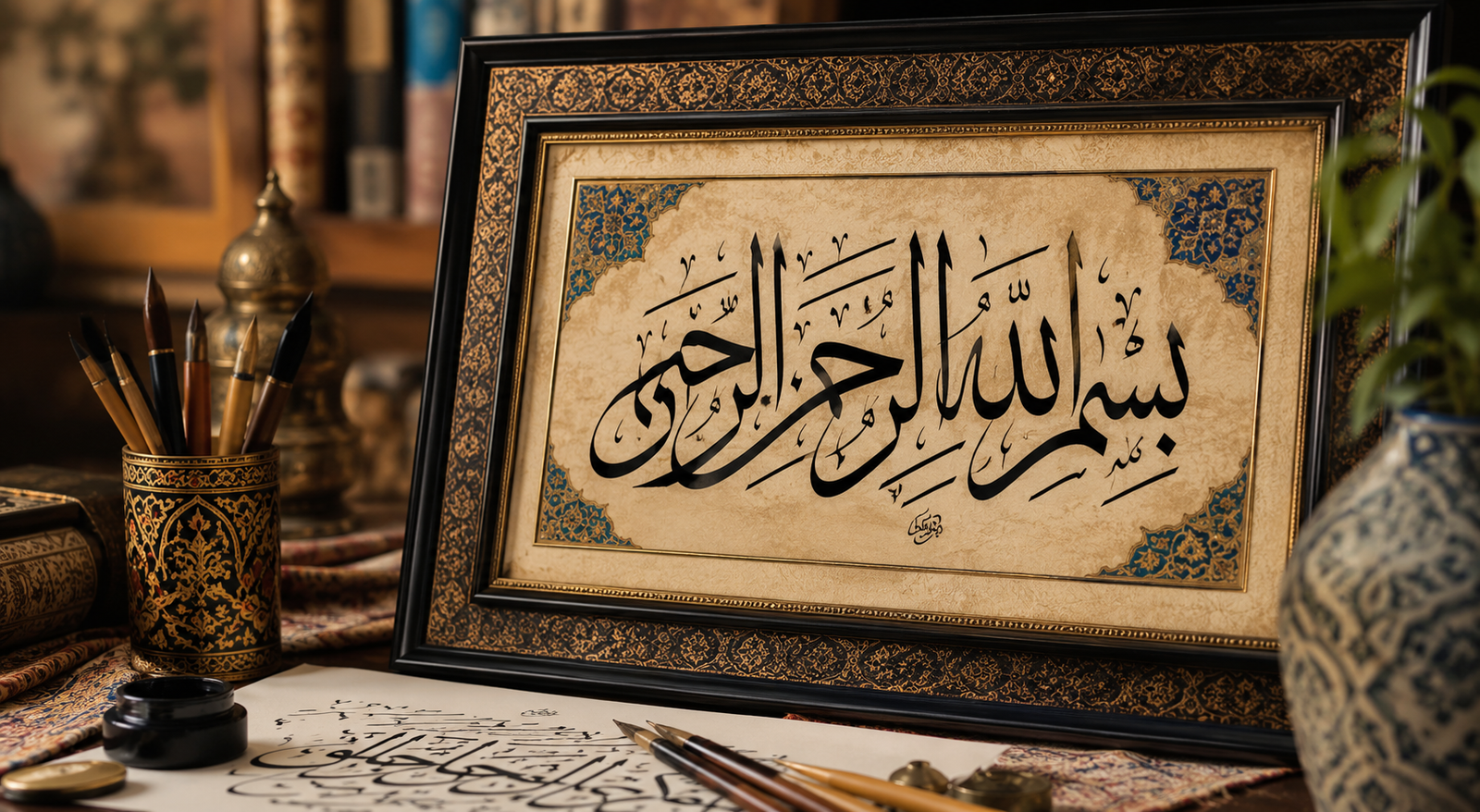
Islamic calligraphy is more than beautiful Arabic lettering. It is a visual art form shaped by language, proportion, rhythm, spirituality, and centuries of artistic tradition. From carefully written Qur'anic verses to contemporary compositions created for homes, weddings, and meaningful spaces, Islamic calligraphy continues to evolve while preserving its connection to Arabic script and Islamic culture.
For many people in the United States, Islamic calligraphy offers a meaningful way to bring faith, heritage, identity, and artistic expression into everyday surroundings. Understanding its styles, techniques, symbolism, and applications can help you appreciate the art more deeply and choose the right piece for your own space or occasion.
Key Takeaways
- Islamic calligraphy combines writing and visual art, using Arabic script, proportion, spacing, composition, and rhythm to create meaningful artwork.
- Traditional Islamic calligraphy includes established scripts such as Thuluth, Naskh, Diwani, and Kufic, each with distinctive visual characteristics and historical uses.
- Modern Islamic calligraphy can reinterpret traditional scripts through contemporary compositions, colors, layouts, and artistic techniques while maintaining respect for the written text.
- Islamic calligraphy wall art and prints can add cultural and spiritual meaning to homes, offices, prayer spaces, and community environments.
- Custom Islamic calligraphy is particularly suitable for meaningful phrases, names, verses, wedding artwork, gifts, and commissioned pieces where personalization matters.
- Choosing a calligraphy artist involves considering script knowledge, composition, craftsmanship, cultural sensitivity, and the intended use of the artwork, rather than appearance alone.
What Is Islamic Calligraphy?
Islamic calligraphy is the artistic practice of writing Arabic and other scripts associated with Islamic artistic traditions in a visually refined and intentional manner. It can incorporate Qur'anic verses, prophetic sayings, prayers, Arabic poetry, names, meaningful phrases, or other culturally significant text. The defining feature is not simply the use of Arabic letters. Skilled Islamic calligraphy depends on the relationship between individual letters, words, lines, spacing, proportions, and the overall composition. A calligrapher may spend considerable time studying how a particular letter is formed, how it connects to neighboring letters, and how the complete text should occupy a page or artistic surface. This makes Islamic calligraphy both a writing discipline and a visual art. The artwork can be highly traditional, carefully following established rules, or more contemporary, using creative layouts and artistic treatments while retaining the character of the script.Why Is Islamic Calligraphy Important?
Islamic calligraphy has a particularly significant place in Islamic art because written language has historically been central to the transmission and presentation of religious knowledge. Arabic calligraphy became especially prominent in the decoration of manuscripts, architectural spaces, ceramics, textiles, metalwork, and other artistic objects. Qur'anic text has been an important subject within the tradition, although Islamic calligraphy also extends beyond religious scripture. Its importance comes from several interconnected elements:Language as Art
Arabic letters have distinctive shapes, connections, curves, and proportions. When arranged by an experienced calligrapher, written language can become an intricate visual composition.Discipline and Precision
Traditional calligraphy requires control of the writing instrument, consistency of proportions, careful spacing, and an understanding of established scripts. The disciplined nature of the practice is part of its artistic character.Cultural Identity
For many people, Arabic calligraphy represents language, heritage, family history, and cultural identity. A carefully selected piece can therefore have meaning beyond decoration.Spiritual Expression
Religious verses, prayers, and phrases can provide a visual reminder of faith and reflection. The meaning of the text remains an important part of the artwork.Major Styles of Traditional Islamic Calligraphy
Traditional Islamic calligraphy encompasses numerous scripts and regional approaches. Each script has its own proportions, shapes, rhythm, and historical associations.Thuluth
Thuluth is recognized for its elegant, flowing forms and strong vertical elements. It has historically been used in architectural inscriptions, manuscripts, and decorative compositions. Its visual presence makes it particularly effective when the calligraphy itself is intended to become a major part of the artwork.Naskh
Naskh is known for its clarity and balanced letterforms. It has played an important role in manuscript production and the writing of Arabic texts. Because of its readability, Naskh demonstrates how calligraphy can remain artistic while also serving a practical communication purpose.Kufic
Kufic is one of the most recognizable early Arabic scripts. Its angular and geometric character makes it particularly suitable for architectural decoration and contemporary geometric compositions. Modern artists may draw inspiration from Kufic structures when creating minimalist Islamic calligraphy art.Diwani
Diwani is known for its flowing appearance and closely arranged letterforms. Historically associated with Ottoman administrative contexts, it later became appreciated as a decorative calligraphic style. Its complex visual rhythm can create highly expressive compositions.Nastaliq and Other Regional Traditions
Nastaliq developed primarily within Persianate calligraphic traditions and is strongly associated with Persian writing. Other scripts and regional approaches also demonstrate how Islamic calligraphy developed across different cultures and languages. This broader history is important because Islamic calligraphy is not a single visual style. It represents a wide artistic landscape shaped by different communities, periods, languages, and aesthetic traditions.Modern Islamic Calligraphy and Contemporary Expression
Modern Islamic calligraphy builds upon traditional knowledge while allowing artists greater freedom in composition and presentation. A contemporary calligrapher might use traditional letterforms but arrange them in an unconventional composition. Another artist may combine Arabic lettering with geometric forms, abstract backgrounds, carefully selected colors, or minimalist design. The goal does not have to be abandoning tradition. Instead, contemporary Islamic calligraphy can create a dialogue between established calligraphic principles and modern visual culture. This approach is particularly relevant to interior design in the United States, where people may want artwork that reflects Islamic identity while fitting naturally into contemporary homes and workspaces. Good modern Islamic calligraphy still depends on understanding the script. Creative freedom works best when it is supported by strong knowledge of letter construction, proportions, composition, and the meaning of the written text.Islamic Calligraphy Art: More Than Decoration
The visual beauty of Islamic calligraphy can immediately attract attention, but the meaning behind the words often gives the artwork its deeper significance. Consider a piece featuring a short prayer. The composition may be visually elegant, but the viewer may also connect with the words personally. Similarly, an Arabic name rendered artistically can represent family, heritage, or identity. A Qur'anic verse may serve as a meaningful reminder within a prayer area or home. This combination of form and meaning is one of the strongest characteristics of Islamic calligraphy art. A successful composition considers both:- What the text means
- How the text looks
- How the letters interact
- How much visual space the composition needs
- Where the artwork will be displayed
- How easily the text can be understood or appreciated
How Is Islamic Calligraphy Created?
Creating high-quality calligraphy involves much more than copying Arabic text into a decorative font. A traditional approach begins with selecting and preparing the text. The artist must pay close attention to spelling, letterforms, diacritical marks, and the intended meaning. The script is then considered. Different texts may work better with different visual structures depending on their length, purpose, and desired presentation.1. Text Selection
The first step is identifying exactly what will be written. For religious content, accuracy is especially important.2. Script Selection
The calligrapher determines which script or visual approach suits the text and composition.3. Letter Construction
Traditional calligraphy relies on established proportions. The writing instrument, angle, stroke thickness, and movement influence the appearance of each letter.4. Composition
Words and lines must be arranged so that the artwork feels balanced. Empty space is not wasted space. It helps define the rhythm and visual hierarchy of the piece.5. Refinement
The artist reviews spacing, alignment, proportions, and overall harmony. Small adjustments can significantly change the appearance of the finished composition.6. Final Presentation
Depending on the project, the calligraphy may become framed artwork, a print, digital artwork, architectural decoration, wedding stationery, or another creative format.Islamic Calligraphy Wall Art for American Homes
Islamic calligraphy wall art can work in many types of interiors, including living rooms, entryways, offices, libraries, prayer spaces, and bedrooms. The best placement depends on the meaning and visual character of the artwork. A large composition can become a focal point in an open room, while a smaller piece may work well within a gallery-style arrangement. When choosing wall art, consider the relationship between the artwork and its surroundings. Wall size, lighting, furniture, viewing distance, and interior style can all affect how the calligraphy is experienced. For religious text, placement also deserves thoughtful consideration. Many people prefer to display meaningful verses or prayers in clean, respectful locations where the artwork can be appreciated properly.Islamic Calligraphy Prints
Islamic calligraphy prints provide a more accessible way to enjoy calligraphic artwork without commissioning an original physical piece. A print can reproduce a digital or scanned calligraphy composition and make it suitable for framing or display. Quality matters, particularly when the artwork contains detailed Arabic lettering. Fine strokes, diacritical marks, and small spaces should remain clear in the final reproduction. Before purchasing a print, consider the artwork's resolution, intended print size, paper quality, framing requirements, and the accuracy of the written text.Custom Islamic Calligraphy
Custom Islamic calligraphy allows the artwork to be created around a specific text, purpose, size, or visual direction. A custom commission might feature:- A meaningful Qur'anic verse
- A personal prayer or Arabic phrase
- A family name
- A meaningful Arabic name
- A wedding phrase
- A personalized gift
- A composition designed for a specific wall or interior
Islamic Wedding Calligraphy
Islamic wedding calligraphy can add a distinctive cultural and artistic element to wedding celebrations. Arabic calligraphy may be incorporated into invitations, welcome signs, seating displays, decorative artwork, gifts, ceremony materials, or keepsake pieces. Personalization can make wedding calligraphy particularly meaningful. Names, dates, blessings, prayers, or carefully selected Arabic phrases can become part of an artwork that remains significant after the celebration. Because wedding materials often need to be reproduced across multiple formats, the original artwork should be created with its intended applications in mind.Islamic Calligraphy Workshops
An Islamic calligraphy workshop can introduce participants to the principles behind the art rather than simply teaching them to imitate a finished design. A useful workshop may cover:- Basic Arabic letterforms
- Pen or writing-tool handling
- Stroke control
- Letter proportions
- Connections between letters
- Spacing and rhythm
- Basic composition
- Practice exercises
- Development of a finished piece