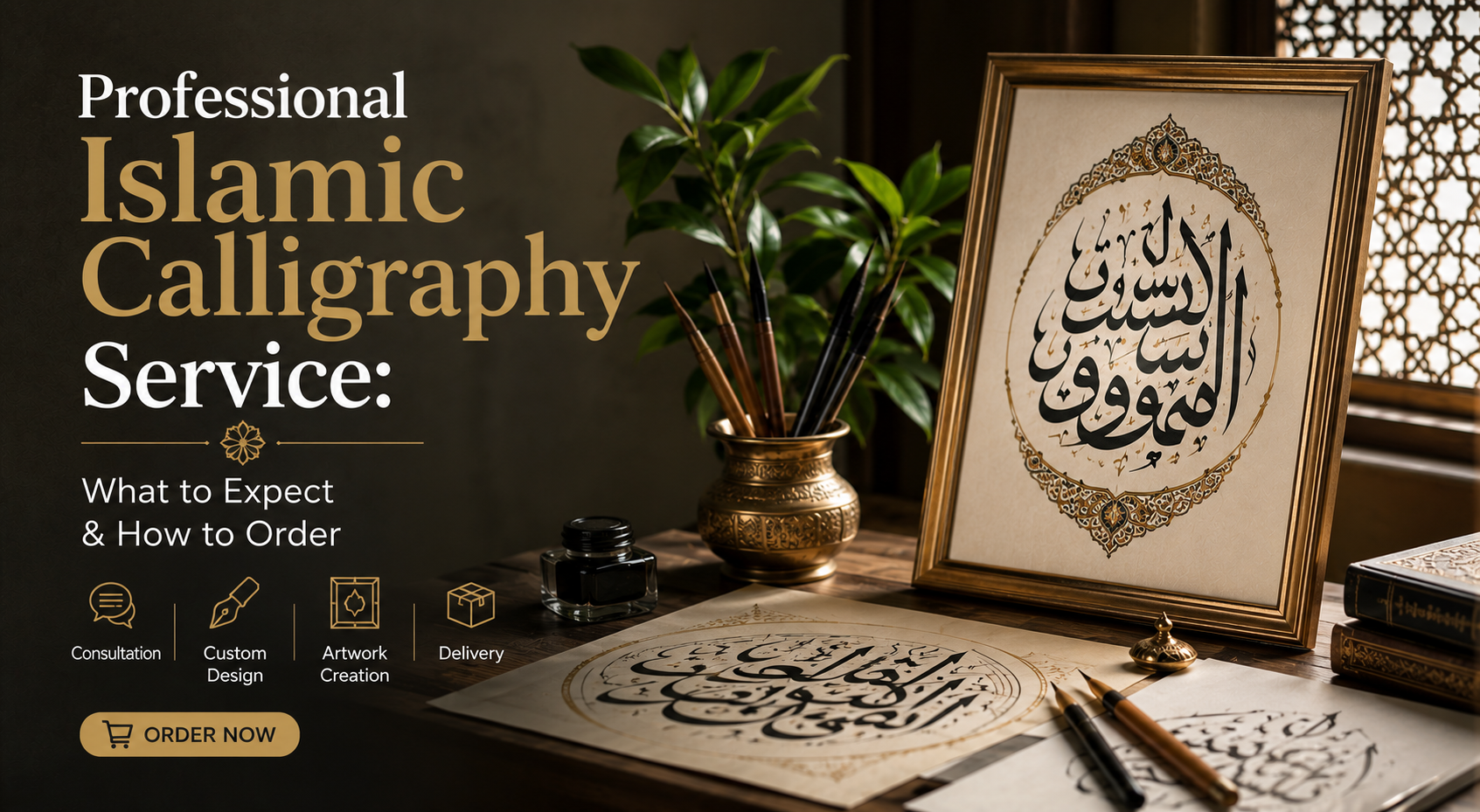
Professional Islamic Calligraphy Service: What to Expect & How to Order
Islamic Calligraphy is becoming increasingly popular among people in the USA who want meaningful artwork for weddings, home décor, gifts, mosques, prayer spaces, and religious institutions. As interest grows in authentic, handcrafted art, many buyers are choosing a professional Islamic Calligraphy Service instead of generic decorative prints or automated designs.
A professional Islamic Calligraphy Service creates custom artwork based on sacred texts, Arabic names, meaningful phrases, or selected religious themes. The process typically includes consultation, script selection, design development, revisions, production, and delivery.
Whether you are looking for a Quranic verse to display in your home, a personalized wedding gift, or an original piece for a mosque or Islamic center, working with an experienced calligrapher can make the final artwork more meaningful and visually refined. Understanding what to expect before placing an order helps you choose the right artist, communicate your vision clearly, and receive a piece that respects both artistic quality and the importance of the text.
What Is a Professional Islamic Calligraphy Service?
A professional Islamic Calligraphy Service provides custom or carefully designed calligraphic artwork based on Arabic script, Quranic verses, Hadith, Islamic phrases, names, and other meaningful text. Unlike mass-produced wall art, professional work combines artistic composition, knowledge of traditional scripts, careful text preparation, and attention to the final presentation.
Islamic Calligraphy is not simply the act of writing Arabic words beautifully. It involves understanding letter proportions, spacing, composition, script characteristics, visual balance, and the cultural and religious significance of the chosen text. Depending on the project, a professional calligrapher may create a handmade original, a digital artwork, a print-ready design, or a finished piece suitable for framing and display.
For clients in the USA, a professional service can also simplify the ordering process. Instead of trying to find a suitable design from unrelated online marketplaces, clients can discuss their requirements directly with an experienced artist. This makes it possible to request specific verses, names, sizes, styles, colors, and formats while receiving guidance throughout the project.
What to Expect from a Professional Islamic Calligraphy Service
When you order custom artwork, the experience should involve more than simply choosing a design and paying for a product. A professional Islamic Calligraphy Service usually follows a structured process that helps transform an idea into a finished piece of art.
Consultation and Understanding Your Vision
The process generally begins with a conversation about what you want to create. You may already have a specific Quranic verse, Hadith, Arabic name, or phrase in mind, or you may need help selecting an appropriate text for a wedding, home, gift, or religious space.
During the consultation, important details may include the purpose of the artwork, preferred dimensions, intended location, color preferences, interior style, budget, and desired completion timeframe. For example, a piece intended for a modern living room may require a different composition from artwork designed for a traditional mosque interior.
A good consultation also gives the artist an opportunity to understand your expectations. Clear communication at this stage can help prevent misunderstandings later, especially when the artwork includes Arabic text where accuracy and correct presentation are particularly important.
Script and Style Selection
One of the most important decisions in Islamic Calligraphy is selecting an appropriate script. Different Arabic calligraphy styles have distinct visual characteristics and historical traditions.
Naskh is known for its clarity and readability. It is often associated with formal Arabic writing and can be suitable when the text needs to remain easy to read.
Thuluth is recognized for its elegant, flowing appearance and strong vertical forms. It is frequently used for architectural decoration, religious artwork, and prominent Quranic compositions.
Diwani is known for its highly decorative and flowing appearance. It can be particularly attractive for names, celebratory artwork, and compositions that require an ornamental style.
Other styles, including Kufic and contemporary approaches, may also be appropriate depending on the text and desired visual result. A professional calligrapher can explain the differences and recommend a style based on the purpose of the artwork.
The choice should not be based only on appearance. The script must also work well with the length of the text, the composition, the available space, and the overall purpose of the piece.
Custom Design Drafts and Revisions
Once the text and general direction have been decided, the artist may prepare an initial design or draft. This stage allows the client to review the overall composition before the final artwork is completed.
A draft may show the arrangement of the Arabic text, the general shape of the composition, decorative elements, colors, or the relationship between the calligraphy and the surrounding space. Depending on the project, the artist may provide digital previews or discuss the design concept before moving forward.
Revisions are often an important part of custom work. A client may request adjustments to the layout, size, color balance, or overall visual direction. However, revisions should be discussed clearly in advance because different artists and projects may have different revision policies.
The goal is to create a final composition that reflects the client's vision while preserving the integrity and visual strength of the calligraphy.
Choice of Medium
Professional Islamic Calligraphy can be created in several formats. The right choice depends on the client's preferences, budget, display location, and desired level of originality.
Canvas artwork is popular for home décor because it can create a soft, contemporary appearance while remaining suitable for a range of interior styles.
Digital prints can offer flexibility in sizing and may be practical for clients who want a high-quality design reproduced in multiple formats.
Framed artwork provides a finished presentation and can be particularly suitable for gifts, living rooms, offices, and religious spaces.
Wall art may involve larger compositions designed specifically for a particular architectural space. In such cases, scale and visibility become important considerations.
Some clients may prefer a completely handmade piece, while others may want a digital design that can be printed at a specific size. A professional Islamic Calligraphy Service should explain the available options and help the client choose a medium that suits the project.
Delivery and Shipping Across the USA
For clients ordering from different parts of the country, delivery is another important consideration. A professional service should provide clear information about production timelines, packaging, shipping methods, and delivery expectations.
Large or delicate artwork may require additional protective packaging to reduce the risk of damage during transportation. Framed pieces and original artwork may also need special handling.
Before ordering, it is helpful to confirm whether the service ships to your location, how shipping costs are calculated, whether the artwork will arrive ready to display, and what the estimated delivery timeframe is. Clear expectations make the ordering experience smoother for both the artist and the client.
Common Uses for Islamic Calligraphy Services
Islamic Calligraphy has a wide range of applications in homes, celebrations, religious spaces, and professional environments. Its versatility allows clients to commission artwork that is both visually attractive and personally meaningful.
Quranic Verses for Home and Mosque Décor
One of the most common uses is displaying Quranic verses in homes, prayer rooms, mosques, and Islamic centers. A carefully selected verse can become an important part of a space's atmosphere while also serving as a meaningful reminder of faith.
The artwork may be created for a living room, entrance area, prayer space, study, or a mosque wall. The size, script, and composition can be selected according to the architectural environment.
Because sacred text carries deep significance, accuracy should always be a priority when commissioning religious artwork.
Wedding and Anniversary Gifts
Custom calligraphy is also popular for weddings, anniversaries, and other important life events. Couples may choose an Arabic phrase, Quranic verse, or personalized composition that reflects their relationship and values.
A custom piece can be more meaningful than a generic gift because it is created specifically for the recipient. The design may be chosen to match the couple's home, wedding theme, or personal preferences.
Personalized Names and Family Artwork
Arabic names can be transformed into elegant calligraphic compositions for individuals, couples, families, and children. Personalized artwork may be created as a birthday gift, housewarming present, wedding gift, or family keepsake.
Some clients also request compositions featuring multiple family names or meaningful phrases. The design can be adapted to create a balanced visual arrangement rather than simply presenting the text in a standard format.
Corporate and Religious Institution Orders
Businesses, Islamic schools, community organizations, mosques, and religious institutions may also commission calligraphic artwork. Large projects can include multiple pieces for offices, reception areas, classrooms, prayer spaces, or event venues.
For institutional projects, consistency in style, size, and presentation may be particularly important. A professional artist can help coordinate the visual direction across multiple pieces.
How to Choose the Right Islamic Calligraphy Service
Choosing an artist or service provider requires more than looking at a single attractive image. The right choice depends on artistic quality, experience, communication, and the ability to handle your specific requirements.
Review the Portfolio
Start by reviewing the artist's previous work. Look for variety in scripts, compositions, colors, sizes, and project types. A portfolio can help you understand whether the artist's style matches your expectations.
Pay attention to the quality of the lettering, composition, spacing, and overall presentation. A strong portfolio should demonstrate consistency rather than only one impressive example.
Consider Experience with Sacred Texts
When your project involves Quranic verses or Hadith, experience and attention to accuracy are especially important. Ask whether the artist is familiar with the text and how the wording is checked before the final design is produced.
A professional approach should treat religious text with care and respect. The artwork should be aesthetically refined without compromising the integrity of the words.
Look for Customization Flexibility
Every client has different needs. You may want a particular verse, name, script, color palette, size, or medium.
A flexible Islamic Calligraphy Service should be able to discuss custom requirements and explain what is realistically possible. The artist should also be honest when a particular layout or script may not work well with the chosen text.
Evaluate Communication and Turnaround Time
Good communication is essential for custom work. Before ordering, confirm how the consultation process works, how drafts are shared, how revisions are handled, and when the final artwork is expected.
Turnaround time can vary depending on the complexity of the project, whether the piece is handmade, the number of revisions required, and the current workload of the artist. Clear communication helps ensure that your expectations match the actual production schedule.
How to Order: Step-by-Step Process
Ordering custom Islamic Calligraphy can be straightforward when the process is clearly organized. The following steps provide a practical overview for clients in the USA.
1. Browse the Portfolio
Begin by exploring the available artwork and reviewing the artist's style. You can visit Nihad Dukhan's official portfolio and website to explore examples of calligraphic work and understand the artistic direction.
Review the scripts, compositions, colors, and types of projects that interest you. Saving examples can make it easier to explain your preferences during the consultation.
2. Share Your Requirements
The next step is to communicate what you want. This may include the exact Quranic verse, Hadith, Arabic name, phrase, preferred script, desired size, color preferences, and intended use.
If you are unsure about the script or composition, explain the purpose of the artwork. An experienced artist can often provide suggestions based on the space and the type of text involved.
3. Discuss the Consultation and Design Direction
During the consultation, the artist and client can discuss the project in greater detail. This is the stage to confirm the medium, dimensions, layout, color direction, and any important visual preferences.
It is also useful to discuss the estimated timeline and the expected process for reviewing the design.
4. Review the Draft
Once the initial concept or draft is prepared, review it carefully. Check the overall composition, visual balance, text, and general appearance.
If changes are needed, communicate them clearly and as early as possible. Specific feedback is generally more useful than broad comments. For example, explaining that you prefer a more open composition or a different balance of colors gives the artist clearer direction.
5. Approve the Final Design
After the agreed revisions have been completed, the final design can be approved. This approval confirms that the composition is ready for production or final delivery.
For sacred text, clients should take the opportunity to carefully review the wording before final approval.
6. Receive the Finished Artwork
The final step is delivery. Depending on the chosen format, the artwork may be supplied as a digital file, print, canvas, framed piece, or another agreed medium.
For physical orders, confirm the delivery address and shipping details. Once the artwork arrives, follow any care instructions provided by the artist, especially for original or delicate pieces.
Why Choose Nihad Dukhan for Your Islamic Calligraphy Needs?
Choosing the right artist is ultimately about finding someone whose artistic approach, experience, and attention to detail align with your project. Nihad Dukhan provides a professional approach to custom Islamic Calligraphy for clients seeking meaningful and visually refined artwork.
The work can be suitable for a variety of needs, including home décor, weddings, gifts, personalized compositions, religious spaces, and larger institutional projects. A focus on thoughtful composition and authentic calligraphic expression allows each piece to be approached as more than a standard decorative product.
For USA-based clients, the ability to discuss a project remotely can make the process accessible regardless of location. Clients can communicate their requirements, review the design direction, and arrange the final format according to the project.
Whether you already know exactly what you want or need guidance selecting a script and composition, a professional consultation can help turn your idea into a finished piece that feels personal, respectful, and suitable for its intended space.
Frequently Asked Questions
What is an Islamic calligraphy service?
An Islamic calligraphy service creates custom or professionally designed artwork featuring Arabic script, Quranic verses, Hadith, Islamic phrases, names, and other meaningful text. Services may include consultation, script selection, design drafts, revisions, handmade artwork, digital files, prints, canvas pieces, framed art, and delivery.
How much does a professional Islamic calligraphy service cost?
The cost varies depending on the complexity of the design, the type of text, the script, the size, the medium, whether the work is handmade or digital, and the level of customization required. The best approach is to discuss your project directly with the artist and request a personalized quote.
How long does it take to complete a custom Islamic calligraphy order?
The timeline depends on the complexity of the artwork, the chosen medium, the number of revisions, and the artist's current schedule. A simple digital design may take less time than a detailed handmade piece. Always confirm the estimated completion time before placing an order.
Can I request a specific Quranic verse or Hadith?
Yes, many professional calligraphers accept requests for specific Quranic verses, Hadith, Arabic names, or meaningful phrases. When requesting sacred text, it is important to provide the wording accurately and work with an artist who takes text accuracy and respectful presentation seriously.
Do Islamic calligraphy services ship across the USA?
Many professional services can arrange delivery to clients throughout the USA, although shipping availability and costs may vary by artwork type and destination. Before ordering, confirm the shipping options, packaging process, estimated delivery time, and whether the artwork will arrive ready for display.
What's the difference between digital and handmade Islamic calligraphy?
Handmade calligraphy is physically created by the artist and may offer a unique original artwork with visible characteristics of the artistic process. Digital calligraphy is created or refined digitally and can offer flexibility in sizing, reproduction, and printing. Both formats can produce beautiful results when created professionally.
Can Islamic calligraphy be personalized with names?
Yes. Arabic names, family names, couples' names, and other personalized text can often be incorporated into custom compositions. The artist may recommend a particular script or layout depending on the length and structure of the name and the intended style of the artwork.
What should I look for when hiring an Islamic calligraphy service?
Review the artist's portfolio, experience with Arabic and sacred texts, customization options, communication process, revision policy, production timeline, and delivery arrangements. It is also important to choose an artist whose style matches your expectations and who approaches religious content with appropriate care and respect.
How do I place an order for custom Islamic calligraphy?
The process usually begins by reviewing the artist's portfolio and sharing your requirements. You then discuss the text, style, size, medium, and design direction during a consultation. After reviewing and approving the draft, the artist completes the final artwork and arranges delivery or digital file transfer.
Conclusion
A professional Islamic Calligraphy Service can help transform meaningful Arabic text into artwork that is personal, visually refined, and appropriate for homes, weddings, gifts, mosques, offices, and religious institutions. The process typically involves consultation, script selection, custom design, revisions, production, and delivery.
Choosing the right artist means looking beyond appearance. Experience, text accuracy, customization, communication, and respect for the meaning of the work all matter. With the right approach, Islamic Calligraphy becomes more than decoration—it becomes a lasting expression of faith, identity, culture, and personal meaning.
If you are ready to explore custom options, visit Nihad Dukhan's website and portfolio to begin your project and discover how your vision can become a finished calligraphic artwork.
Ready to order your custom piece? Visit ndukhan.com to start your Islamic calligraphy journey today.