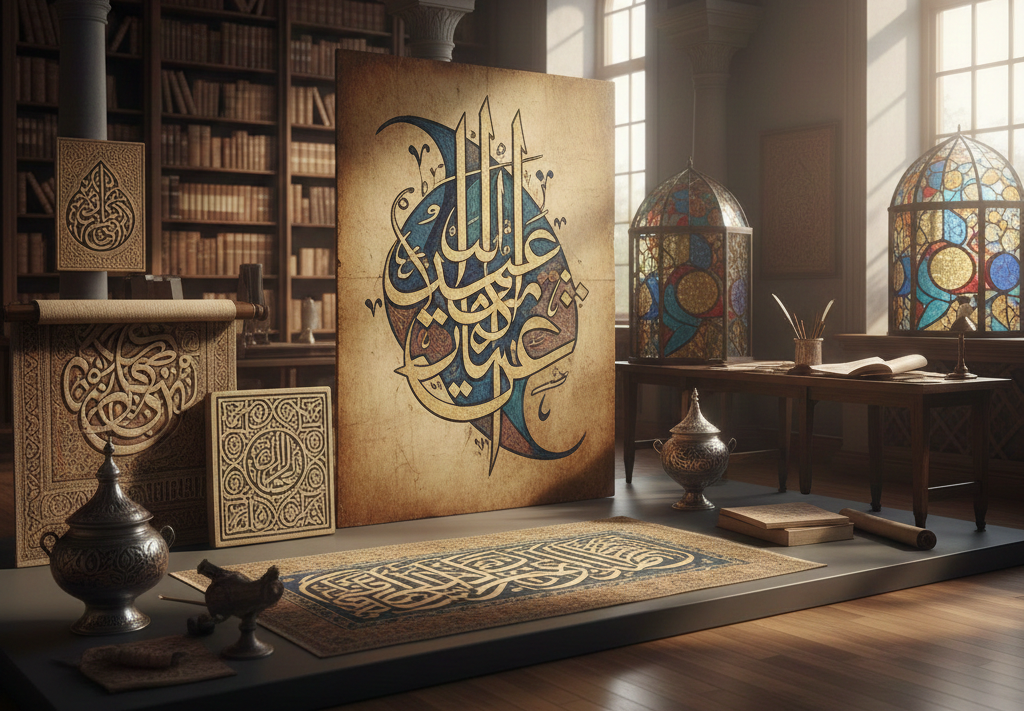
How Did Arabic Calligraphy Become a Core Part of Islamic Art?
Arabic calligraphy is much more than just beautiful writing. It is a central element of Islamic art, admired for its intricate designs, spiritual depth, and aesthetic harmony. From mosque walls to illuminated manuscripts, calligraphy has historically been a primary means of expressing religious devotion and cultural identity. But how did Arabic calligraphy evolve to become such an essential part of Islamic art? In this blog, we explore its historical roots, stylistic evolution, cultural significance, and modern adaptations.
The Historical Origins of Arabic Calligraphy
Arabic language has been a vital medium for communication, literature, and religious texts. The earliest forms of Arabic script were simple and functional, used primarily for trade, record-keeping, and official inscriptions.
The transformation of writing into a sacred art form was largely influenced by the revelation of the Quran. As the holy book of Islam, the Quran demanded precision in its transcription, and this reverence for text elevated Arabic writing into an art form. Calligraphy was not just about legibility; it was about honoring divine words.
Early Styles and Development
Several script styles emerged in the early centuries of Islam:
- Kufic Script – Characterized by bold, angular lines, this was one of the first formal scripts used to write the Quran. Its geometric nature made it ideal for architectural inscriptions, such as on mosque walls and coins.
- Naskh Script – Developed later, Naskh became widely used for manuscript writing due to its legibility and fluidity. This script paved the way for modern Arabic fonts and digital calligraphy.
- Thuluth Script – Known for its elegant, flowing curves, Thuluth was often used in decorative arts, such as on ceramics, architectural elements, and large-scale Quranic inscriptions.
Each style had its function and aesthetic, reflecting the balance between artistic expression and textual clarity.
Arabic Calligraphy as a Spiritual Practice
In Islam, the depiction of living beings in religious art is traditionally discouraged, leading artists to focus on abstract forms and calligraphy. Arabic calligraphy became a spiritual discipline, with artists dedicating themselves to perfecting every stroke.
The process was meditative: calligraphers often practiced for years, refining their techniques to achieve both beauty and accuracy. In this way, calligraphy was not just an art but a form of devotion, connecting the practitioner to the divine.
Integration with Islamic Architecture and Decorative Arts
Arabic calligraphy is inseparable from Islamic architecture. Mosques, palaces, and public buildings often feature Quranic verses inscribed in exquisite scripts, blending visual splendor with spiritual meaning.
Decorative arts, such as ceramics, metalwork, textiles, and manuscripts, also prominently feature calligraphy. Artists experimented with form and composition, turning letters into patterns, motifs, and intricate designs. This fusion of calligraphy and art became a hallmark of Islamic cultural identity.
Calligraphy and Modern Islamic Art
In contemporary times, Arabic calligraphy continues to evolve, merging traditional techniques with modern artistic trends. Digital tools and AI-powered design software allow artists to experiment with new forms, textures, and styles, making calligraphy more accessible and versatile.
Modern artists are blending calligraphy with abstract art, contemporary painting, and graphic design, creating works that respect tradition while appealing to modern aesthetics. This fusion has expanded calligraphy’s reach beyond religious or architectural contexts, entering galleries, digital platforms, and global art markets.
Cultural and Global Influence
Arabic calligraphy is no longer confined to the Islamic world. Its elegance, rhythm, and abstract beauty have inspired artists worldwide. From typography designers to tattoo artists, Arabic scripts influence visual culture globally.
Moreover, international exhibitions and online platforms allow calligraphers to showcase their work, connecting traditions with global audiences. The fusion of modern design with ancient scripts demonstrates the timeless relevance of Arabic calligraphy.
FAQ Section
Q1: Why is Arabic calligraphy so important in Islamic culture?
Arabic calligraphy represents the written word of the Quran. It is a spiritual and artistic expression that communicates devotion, cultural identity, and aesthetic harmony.
Q2: What are the main styles of Arabic calligraphy?
The main styles include Kufic, Naskh, Thuluth, and Nastaliq. Each has unique features, suitable for specific purposes like manuscripts, architecture, or decorative art.
Q3: Can Arabic calligraphy be modernized?
Yes, contemporary artists combine traditional scripts with modern art forms, digital design, and abstract expression, making calligraphy relevant for today’s visual culture.
Q4: How does calligraphy integrate with architecture?
Calligraphy decorates mosques, palaces, and monuments, often featuring Quranic verses or poetic inscriptions, harmonizing spiritual content with artistic beauty.
Q5: How can I learn Arabic calligraphy?
Learning involves studying classical scripts, practicing stroke precision, and understanding the spiritual and cultural context. Online courses, private lessons and workshops by masters like Nihad Dukhan provide guidance for beginners and advanced learners.
Conclusion
Arabic calligraphy is a cornerstone of Islamic art, bridging tradition, spirituality, and aesthetics. Its journey from simple script to intricate masterpieces reflects the cultural, religious, and artistic evolution of the Islamic world. Today, it continues to inspire artists globally, demonstrating that the beauty of the written word transcends time, borders, and mediums.
For anyone interested in exploring modern Arabic calligraphy or learning this revered art form, Nihad Dukhan offers a range of tools and courses that blend classical techniques with contemporary innovation. Explore more at ndukhan.com.